ID
ID EN
EN 中文
中文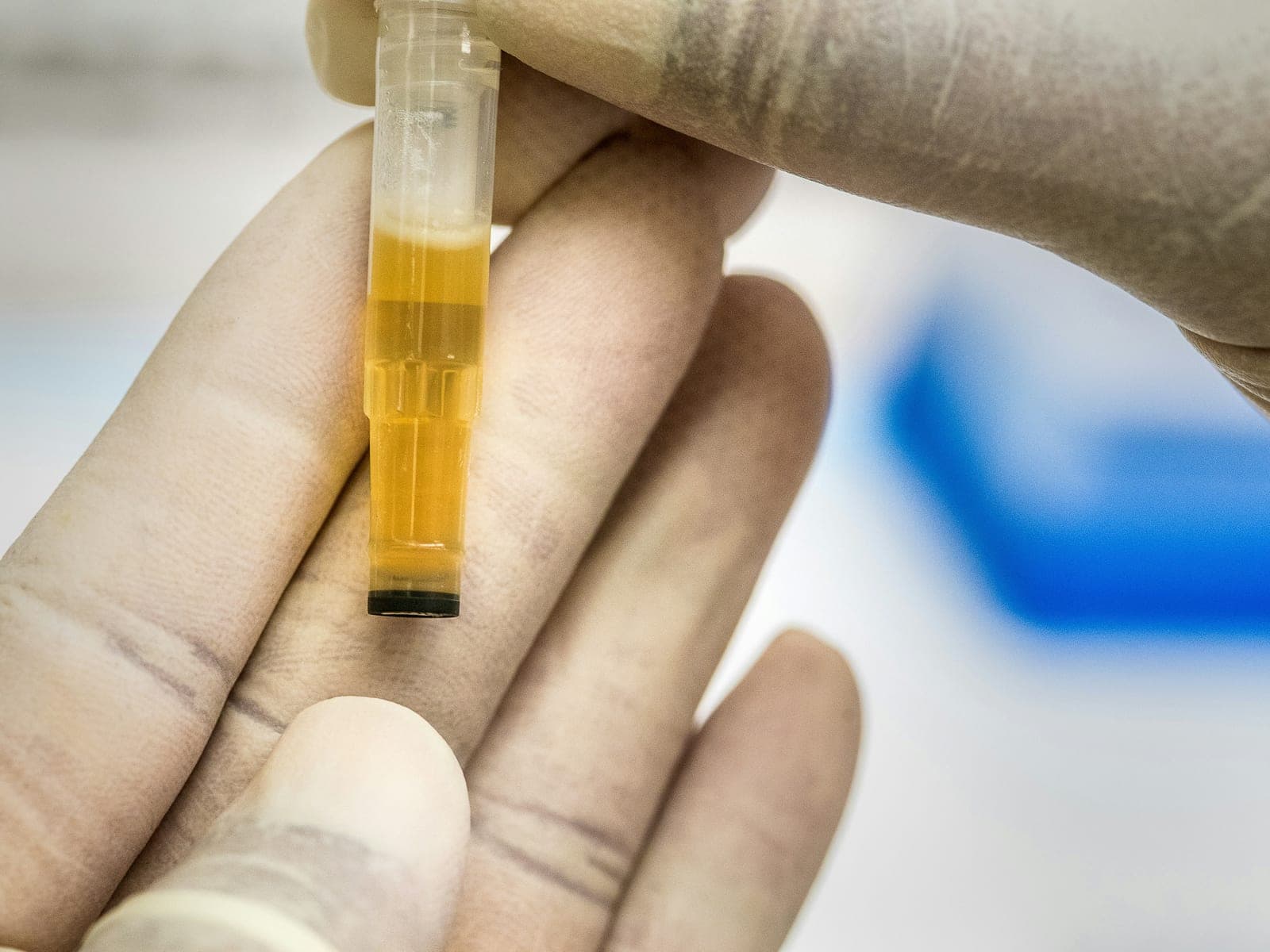
A drug test for work in Indonesia is usually a rapid urine test that checks for several drug groups at once. A "3, 5, or 6 parameter" test (often called a 3, 5, or 6 panel test elsewhere) simply tells you how many drug groups the kit reads; it is not a term used in any regulation. A positive rapid test is only a presumptive result until the sample is rechecked in a laboratory with a different method, and legitimate medicines can also react. That is why you should declare every medicine you take before your sample is collected.
This article is for job applicants and roster workers on remote sites. A section for HR teams is at the end.
Do regulations require a drug test before starting work?
The Indonesian rule that deals specifically with drugs at work is Minister of Manpower and Transmigration Regulation No. PER.11/MEN/VI/2005, which is still listed as in force by the Ministry of Manpower's legal database (JDIH). Article 2 requires employers to take active steps to prevent and deal with drug problems through a policy and a programme.
On testing, Article 6 says an employer may ask a worker who is suspected of misusing narcotics, psychotropics, or other addictive substances to take a test, at the company's expense. The test must be carried out by an authorised health facility or laboratory, and the result is kept confidential in the same way as other medical records.
The regulation says nothing specific about testing job applicants. Pre-employment drug testing is a company policy, usually run alongside the pre-employment medical covered in our article on periodic medicals for mine workers. The ILO code of practice on alcohol and drugs at work also notes that a pre-employment test may form part of a medical examination to assess fitness for work.
In mining, the safety guidelines in Minister of Energy and Mineral Resources Decree No. 1827 K/30/MEM/2018 state that mine workers under the influence of alcohol or drugs (narcotics, psychotropics, and other addictive substances, known in Indonesia as napza) are not allowed to work.
What does a 6 parameter drug test check for?
One parameter means one drug group, and the groups covered by a 3, 5, or 6 parameter kit vary between brands and laboratories. No regulation sets a standard list for a "6 parameter" test, so ask the tester which substances are included.
For comparison, the review by Moeller and colleagues (2008) notes that the US federal workplace testing guidelines at the time required five groups: amphetamines, cannabinoids (marijuana), cocaine, opiates, and phencyclidine.
A rapid test reads a drug group, not a specific medicine: a benzodiazepine test, for example, cannot tell one sedative from another. Some drugs in a group can also be missed; Moeller and colleagues give fentanyl and oxycodone as examples that are usually not picked up by an opiate screen.
How long do drugs stay detectable in urine?
The table below shows approximate urine detection times from the review by Moeller and colleagues (Table 2). Treat them as a general guide, not fixed limits.
| Substance | Approximate detection time in urine |
|---|---|
| Alcohol | 7 to 12 hours |
| Amphetamine and methamphetamine | 48 hours |
| Cocaine metabolites | 2 to 4 days |
| Marijuana, single use | 3 days |
| Marijuana, daily use | 10 to 15 days |
| Marijuana, long-term heavy smoker | More than 30 days |
| Morphine | 48 to 72 hours |
| Short-acting benzodiazepines (e.g. lorazepam) | 3 days |
| Long-acting benzodiazepines (e.g. diazepam) | 30 days |
Detection time depends on factors such as how the body processes the substance, body size, how long it has been used, urine acidity, and when it was last taken. The same review stresses that a urine test does not show when a substance was last used, how long someone has been using it, or whether they were under its influence at the time of the test.
Which medicines can cause a positive result?
Rapid tests use antibodies that recognise a particular molecular shape, so other substances with a similar shape can react too. The review by Saitman and colleagues (2014) collects reports of these false positives across many test groups. The ILO code also warns that some legally prescribed drugs can be mistaken for illicit substances.
Examples from the list in the review by Moeller and colleagues (Table 3):
| Rapid test result | Examples of medicines or substances reported to react |
|---|---|
| Amphetamines | Cold medicine decongestants such as pseudoephedrine, ephedrine, and phenylephrine; bupropion; trazodone; ranitidine |
| Opiates | Dextromethorphan, quinolone antibiotics, rifampicin, poppy seeds |
| Cannabinoids | Efavirenz, proton pump inhibitor stomach medicines |
| Benzodiazepines | Sertraline, oxaprozin |
These medicines do not always cause a positive result; according to the same review, the risk depends heavily on the type of test kit. Cough medicine containing codeine is a different case: codeine is an opiate, so a doctor has to judge whether a positive result matches the medicine you took. Do not stop a prescribed medicine just because you are about to be tested.
What should roster workers prepare?
Roster workers are often tested at their point of hire before mobilisation or on arrival at site. For medicines you bring from home, such as cold medicine, cough medicine, or prescribed drugs:
- list everything you have taken in the last few days, including over-the-counter medicines, herbal remedies (jamu), and supplements;
- bring the prescription or a doctor's letter, and keep medicines in their original packaging;
- give that list to the doctor or tester before your sample is taken, not after the result comes back;
- ask which substances are being tested and how the result will be given to you.
For Class II or III narcotics prescribed by a doctor, Law No. 35 of 2009 on Narcotics allows patients to keep and carry them for their own use, provided they have valid proof that the medicine was obtained lawfully (Article 53). Medicines that cause drowsiness are also worth discussing with the clinic doctor, as covered in our article on fatigue in roster workers.
What does a positive rapid test mean?
A positive rapid test is not a conclusion. The review by Saitman and colleagues describes the accepted practice: a positive immunoassay result is presumptive until it is confirmed by a second, independent chemical technique. Moeller and colleagues name gas chromatography with mass spectrometry (GC-MS) as the reference standard for confirmation.
The ILO guiding principles on workplace testing (Appendix V of the ILO code) set out what should happen next:
- every positive result is confirmed before anyone is notified or any action is taken;
- a medical professional reviews the result, checks medical records, and interviews the worker, including about prescribed medicines;
- the worker has the chance to discuss the result with the medical reviewer;
- if there is a legitimate medical explanation, the result is reported as negative.
The same guidance recognises the right to be told that testing is part of pre-employment screening and the right to information about your results. A worker who refuses a test should not be presumed to be a drug user.
Based on the test result, a doctor trained in narcotics, psychotropics, and other addictive substances may decide whether treatment or rehabilitation is needed (PER.11/2005, Article 6(4)).
On a remote site, if a rapid test is done at the site clinic, a positive sample needs to go to a qualified laboratory for confirmation. While you wait, your work status follows the company's written policy. Under the ILO code, health staff tell the employer only whether you are fit, unfit, or fit with restrictions, not your diagnosis; what those categories mean is explained in our article on fitness for work on site.
Notes for HR teams
Points to build into a company policy, mainly from PER.11/2005:
- Written policy. The policy is set after consultation with workers or their union, includes the employer's commitment and a commitment to set up a unit to run the programme, and applies without discrimination (Article 4). That unit may be combined with the occupational safety and health committee (P2K3) or the occupational health service.
- A programme built into OSH. The programme covers communicating the policy to all workers, awareness and training, counselling support, and regular evaluation (Article 5).
- Clear testing rules. The ILO code recommends that the policy states the purpose of testing, when each type of test is used, and which substances are tested.
- Treatment and discipline. Arrangements for treatment or rehabilitation belong in the employment contract, company regulations, or collective agreement. Disciplinary action may be taken against a worker who refuses to join the prevention, control, treatment, or rehabilitation programme (Article 7).
- Rehabilitation. Law No. 35 of 2009 requires people with narcotics dependence and victims of narcotics misuse to undergo medical and social rehabilitation (Article 54). People with dependence who are of legal age must report themselves, or be reported by their family, to a community health centre (puskesmas), hospital, or government-designated rehabilitation institution (Article 55).
- Possession or dealing. This is separate from a test result. Anyone found possessing or dealing narcotics, psychotropics, or other addictive substances at work must be reported to the police at once, and the report must also go to the district or city manpower office through P2K3 or the occupational health service (Article 8).
- Confidentiality. The ILO code recommends treating information a worker discloses about alcohol or drug problems like other confidential health data, keeping it out of the personnel file, and storing it separately.
Health examinations for workers and occupational health programmes are part of our occupational health service. Confirmation tests and other specialised laboratory work are coordinated with laboratories that meet the requirements.