
 ID
ID EN
EN 中文
中文
Occupational health
Snakebite first aid at plantations, mines, and remote sites
Snakebite first aid under Indonesia's 2023 national guideline and WHO: splinting, why not to tie the limb, danger signs, SABU antivenom, and referral from site.
Equipment & pharmacy
We manage medicines and medical consumables for your health facility, from procurement to reporting, so supply on site does not run out.
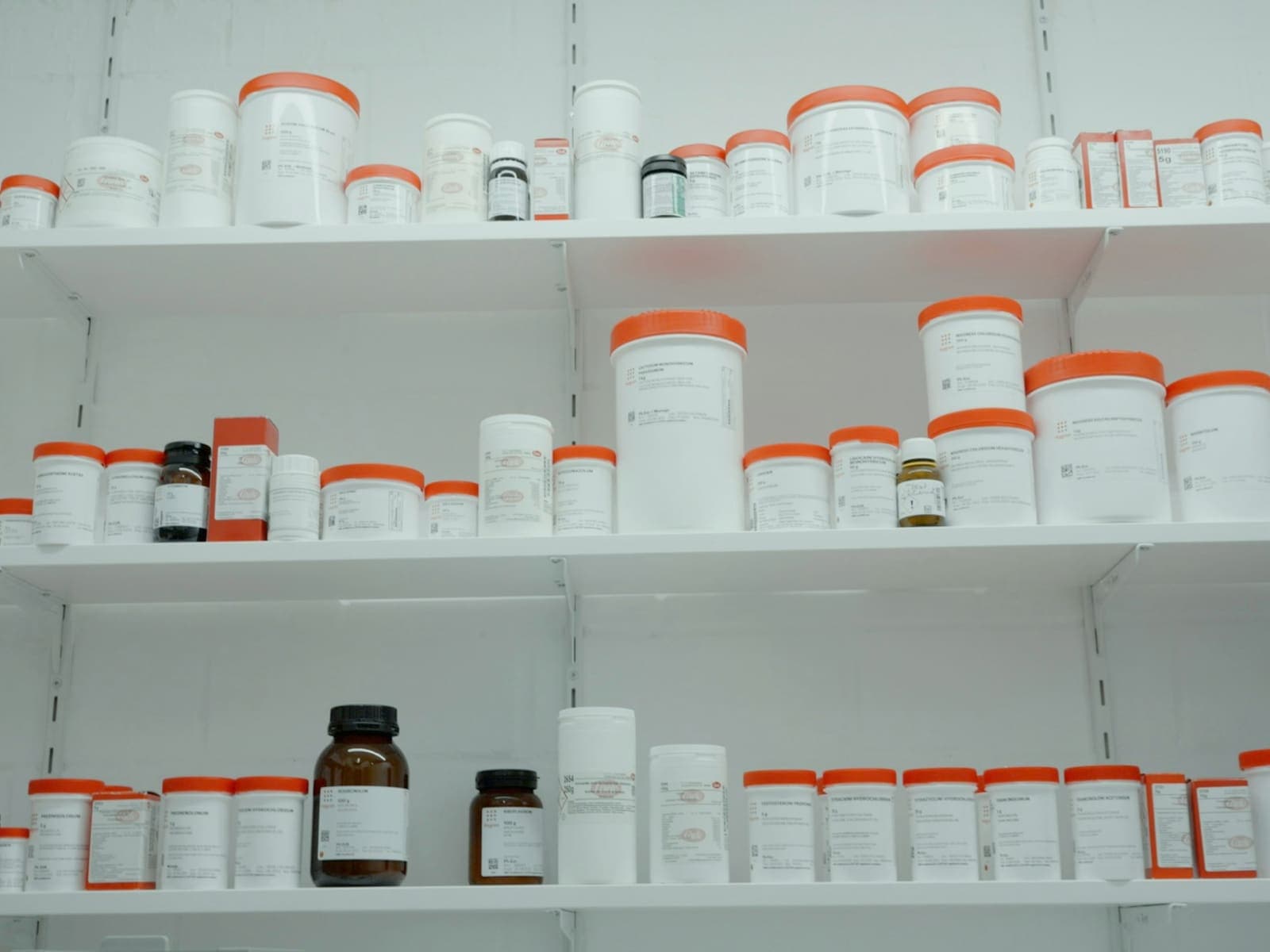
Illustration · Photo: Jeff Trierweiler / Unsplash
A clinic at a remote site cannot borrow medicine from the pharmacy next door. When stock runs out, the next delivery may take time, and the patient who needs that medicine cannot wait. Good pharmacy management means making sure the medicines needed are available, stored correctly, and recorded, without piling up stock that ends up expiring.
Our pharmacy support covers medicines and medical consumables, such as gauze, gloves, IV fluids, and syringes. The work is carried out under the responsibility of qualified pharmacy staff, in line with the applicable regulations.
The medicine list is drawn up with the doctors on duty, based on the facility's services and the work risks on site. Medicines and consumables are procured through official distribution channels, and every delivery is checked: quantities, batch numbers, expiry dates, and the condition of the packaging.
Storage follows the requirements of each product. Some medicines need cool storage or a cold chain, and some need a dedicated cabinet with restricted access. At hot and humid sites, storeroom temperatures have to be checked routinely and the readings recorded.
The biggest challenges at remote sites are distance and access. Roads can be cut off in the rainy season, boat or flight schedules can change, and emergency deliveries are expensive and not always possible. That is why we plan supply by looking at several things together:
From this, a reorder point is set for each medicine. Orders go out before stock reaches its minimum, not when the shelf is already empty.
When a company has several clinics or first-aid posts, we manage distribution between them so stock does not pile up in one place while another runs short. Every transfer is recorded, as is usage at each facility.
Stock is checked regularly by physical count and reconciled with the records. Any discrepancy is traced to its cause, not just corrected on paper.
Some medicines come with stricter handling rules, such as those that need a cold chain or whose distribution is specially controlled. For these, we set who may access them, how they are stored, and how every issue is recorded, in line with the applicable regulations.
The same applies when a product is recalled. Because stock is recorded by batch number, affected products can be found quickly at any clinic, set aside, and handled according to procedure. Damaged or expired medicines are destroyed in the proper way, not thrown out with ordinary waste.
Orderly records protect both workers and the company. Regular reports cover medicine usage, closing stock, items nearing expiry, and significant events such as stock-outs or recalled products. The clinic team can use these reports to adjust the medicine list, and management can use them to plan budgets.
Pharmacy support can run on its own or together with our onsite clinic and medical center services. ADR Medika is a new company, founded in 2026, so we choose a way of working that can be checked: every figure in a report can be traced back to its receiving, storage, and usage records.
How it works
Location, workforce size, and the work pattern at your site.
We review site readiness and the relevant services.
A clearly defined scope and pricing.
A mobilisation schedule agreed together.
Services run and are reviewed regularly.
Built for these sectors
The medicine list is drawn up with the doctors on duty, based on the facility's services, the work risks on site, and the pattern of worker complaints. The list is reviewed regularly. We do not stock items that have no clinical reason to be there.
Stock is recorded by batch number and expiry date, then issued on a first-expiry, first-out basis. Medicines approaching their expiry date are flagged well in advance, so they can still be used, moved, or removed according to procedure.
A supply plan for that situation is set from the start: a minimum stock on site that is enough to get through a period of disrupted access, alternative delivery routes, and a list of the medicines that matter most in an emergency. The plan is reviewed ahead of the rainy season or when work patterns change.
Yes. We start by listing the current stock, how it is stored, and how it is recorded. From there we propose the changes that make the biggest difference, such as batch recording, minimum stock levels, or reorganising the storeroom.
Occupational health
Snakebite first aid under Indonesia's 2023 national guideline and WHO: splinting, why not to tie the limb, danger signs, SABU antivenom, and referral from site.

Medical staffing
What a pharmacist does in an Indonesian company clinic, when the clinic must employ one, how work is split with pharmacy technicians, and two site models.
Site clinics
Managing medicines at a remote site clinic under Permenkes 34/2021: sizing orders per supply run, ABC-VEN buffers, receiving checks, cold chain, and disposal.
Tell us the location, headcount, and work pattern. Our team will scope it realistically.
Discuss your site's needs