ID
ID EN
EN 中文
中文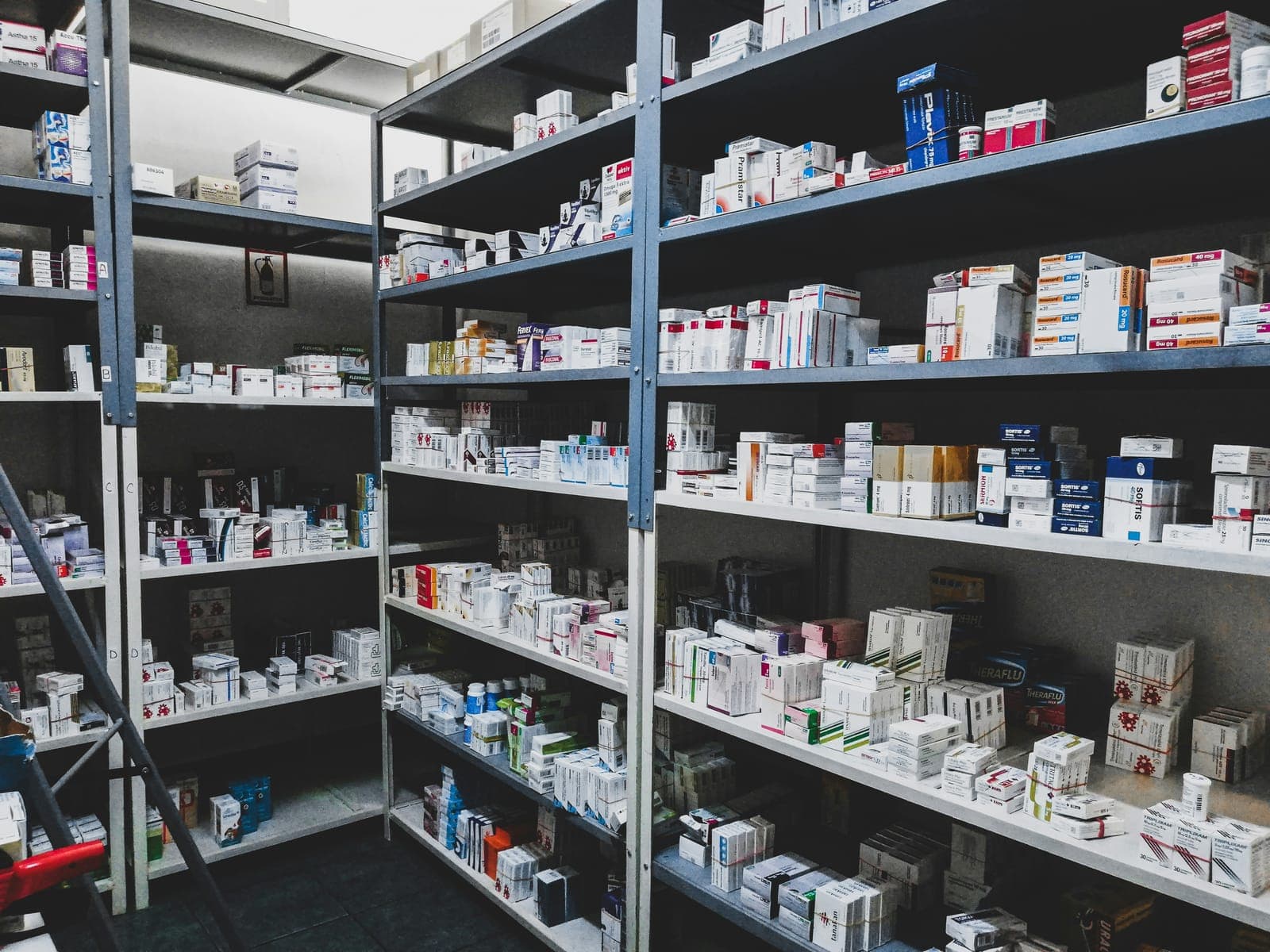
Under Permenkes No. 34 of 2021, the Indonesian health minister's regulation on pharmacy service standards in clinics, managing medicines in a clinic runs from selection and planning, through procurement, receiving, and storage, to disposal and recall, stock control, and record-keeping. A site clinic goes through the same steps as a clinic in town. What changes is the rhythm. Medicines arrive on the site's transport schedule, so needs are sized per supply run, deliveries are checked on site because sending goods back is slow, and the medicine room has to stay cool when site power fails.
Emergency drug stock is covered separately in our article on emergency drugs for site clinics.
What are the stages of medicine management in a clinic?
Article 4(2) of Permenkes 34/2021 lists eight stages for outpatient clinics; inpatient clinics add distribution to their service units. The details sit in Chapter II of the Annex. This is where each stage tends to go wrong at a site:
| Stage | What the rule covers | Where sites struggle |
|---|---|---|
| Selection | Based on the clinic formulary, reviewed at least once a year | The list does not reflect the site's work hazards |
| Planning | A calculation method the clinic can justify | Long wait between order and arrival |
| Procurement | Licensed channels and a purchase order | Orders have to meet the transport schedule |
| Receiving | Goods checked against the order and invoice | Wrong items are hard to send back |
| Storage | Temperature, security, FEFO | Heat, and power that comes from a generator |
| Disposal and recall | A list and an official record | Expired stock piles up in the store |
| Control and records | Stock cards, stock takes, reports | Records break when staff rotate |
For an occupational health clinic (Klinik Kesehatan Kerja), Permenkes No. 11 of 2025 allows two routes: run its own pharmacy service, or partner with a pharmacy. That choice decides who carries out each stage. Other licensing requirements for company clinics are in our article on mining site clinics.
How do you plan medicine needs for a remote site?
The Annex to Permenkes 34/2021 gives a formula for the consumption method:
A = (B + C + D) - E
A is the quantity to order, B is average use per month, C is buffer stock, D is lead time stock (enough to cover the wait for delivery), and E is stock on hand. The worked example in the Annex assumes a one-week lead time, which suits a clinic close to its distributor.
At a site we change two things:
- The period. We build each order around the actual supply run to site, not the calendar month. Use is counted from one delivery to the next.
- The lead time. D runs from the day the purchase order goes out until the medicines have been checked and shelved on site. That includes days sitting in a transit warehouse and waiting for the next boat or flight. We add a margin for weather, and every figure comes from that site's own delivery records.
A new site has no usage history. For that case the Annex offers proxy consumption: needs are extrapolated from another clinic with a similar population and range of services. The other option is the morbidity method, where the number of cases of each condition is multiplied by the quantity of medicine its treatment guideline calls for. We start from the disease pattern of a comparable site, with a similar headcount and similar work hazards, and switch to the clinic's own consumption data once a few supply runs are on record.
How much buffer stock is enough?
For the consumption method, the Annex to Permenkes 34/2021 puts buffer stock at 10% to 20% of requirements, or whatever the clinic's policy sets. The Technical Guidelines for Planning Medicine Needs, published by the Ministry of Health in 2023, tier the buffer by combining ABC analysis (share of spending) with VEN analysis (vital, essential, non-essential):
| Group | Category | Buffer level |
|---|---|---|
| Vital: AV, BV, CV | Priority | 25% to 30% |
| Essential: AE, BE, CE | Main | 15% to 25% |
| Non-essential: AN, BN, CN | Additional | 10% to 20% |
The guidelines are technical reference for health facilities and health offices drawing up medicine plans. Treat the figures as a working guide, not a legal obligation for a company clinic. The same document recommends that pharmacists and doctors agree the VEN grouping together. Its Table 4 lets vital or essential medicines that take a long time to arrive go into group A, which gets tight control and is ordered little and often. A site with infrequent deliveries cannot always order more often, so a realistic buffer and lead time have to carry the load. Stock should still not run to excess, which the Annex names as one of the aims of planning.
Who signs the order, and where can you buy?
Article 5 of Permenkes 34/2021 lists the permitted sources: pharmaceutical manufacturers, licensed pharmaceutical wholesalers, medical device distributors, medical device shops, and/or pharmacies. Buying from a pharmacy is only allowed to cover a shortfall when supply is scarce at distributors and the clinic has run out. The purchase order is signed by a pharmacist with their practice licence (SIPA) number, and it may be sent electronically. For electronic orders, the Annex asks for proof that the distributor received them. Narcotics, psychotropics, and precursors each have their own order form.
What do you check when a delivery reaches site?
Receiving is done by the pharmacist, or by pharmacy staff they designate when they are unavailable. Chapter II, section D of the Annex lists the checks:
- packaging, seals, and labels are intact;
- name, dosage form, strength, and pack contents match the file copy of the order;
- manufacturer, supplier, quantity, batch number, and expiry date match the invoice or delivery note.
Items that do not match go back at the point of receipt. If that cannot happen, for example because the goods came by courier, an official record of the mismatch is drawn up for the supplier. When everything matches, the receiver signs the invoice with their full name, SIPA or SIPTTK licence number, and the facility stamp.
We do this physical check on site, not just at the transit warehouse, because returns from a remote location cannot happen straight away. For cold-chain medicines, the temperature record from the journey is read and kept. The WHO guidance below also asks for the condition of each batch on arrival to be recorded.
How do you store medicines in a hot container clinic?
The storage section of the Annex requires, among other things, cooling that keeps the room below 25 °C, refrigerators for medicines that need them, temperature monitoring of rooms and refrigerators using a calibrated thermometer plus a written temperature log, and a dedicated space for vaccines only. If the power goes out, medicines are moved somewhere that still meets the conditions, and the medicine store should, where possible, be on the priority list for backup power.
In a container clinic we put three things in place from day one: air conditioning for the medicine room, a generator circuit that serves the medicine refrigerators first, and a temperature data logger in every refrigerator.
Keeping the cold chain
WHO Technical Report Series 961, Annex 9 is model guidance for storing and transporting time- and temperature-sensitive pharmaceutical products. A few of its clauses apply directly to medicine refrigerators at a site:
- a written contingency plan for power failure (3.9.2), and emergency plans that responsible staff know and have rehearsed (9.1);
- temperatures checked and recorded at least twice a day, morning and evening, seven days a week; devices that record continuously, such as battery-powered loggers, are preferred over a plain thermometer (4.5.2, 9.3.1);
- monitoring devices calibrated against a certified, traceable reference at least once a year unless otherwise justified (4.10.1).
How do you dispose of medicines at a remote site?
Expired medicines
At each stock take, anything due to expire within the next 6 months is listed, marked, and issued first (FEFO). Expired stock is stored apart, labelled "expired", and then returned to the distributor or destroyed. An expiry date that shows only month and year means the product can be used until the end of that month.
The Annex sets out the disposal steps:
- list the medicines and consumables to be destroyed;
- prepare a disposal record;
- agree the schedule, method, and location with the parties involved;
- destroy them in a way that suits the type and dosage form, in line with current regulations.
Narcotics, psychotropics, and precursors are destroyed by a pharmacist, witnessed by the district or city health office, with a disposal record. At a site far from the health office, we keep these medicines locked away separately with an up-to-date list, then agree a disposal date with the health office and site management.
What has to be recorded?
Every medicine has its own stock card, on paper or in a validated electronic system that can be traced and printed. It records the name, dosage form, strength, and quantity held; the date, document number, source or destination, and quantity of each movement; batch number and expiry date; and the initials of the staff member. A stock take happens at least once a month, and narcotics and psychotropics must be reported as the regulations require. WHO guidance adds that electronic records should be backed up to media separate from the main computer (9.2.1).
Stock handover between staff needs its own time in the roster, as we explain in our article on medical staffing for rotating rosters. Complete stock cards also give you the B figure for planning the next supply run.
Through our pharmacy support service we handle procurement of medicines and consumables, delivery all the way to remote sites, storage that meets temperature requirements, control of stock and expiry dates, and regular reports. We set a reorder point for each medicine based on usage, the lead time until it reaches site, and minimum stock of medicines needed in an emergency.