
 ID
ID EN
EN 中文
中文
Regulations
Work accident reports in Indonesia: stage I, II, JKK claims
Where and when to report a work accident in Indonesia: stage I and II reports within 2 x 24 hours, JKK claim papers, late-report risk, and site clinic evidence.
Occupational health & education
We build OHS and first aid training around the work risks and roster pattern of your site, with plenty of hands-on practice, and support you in managing occupational health risks.
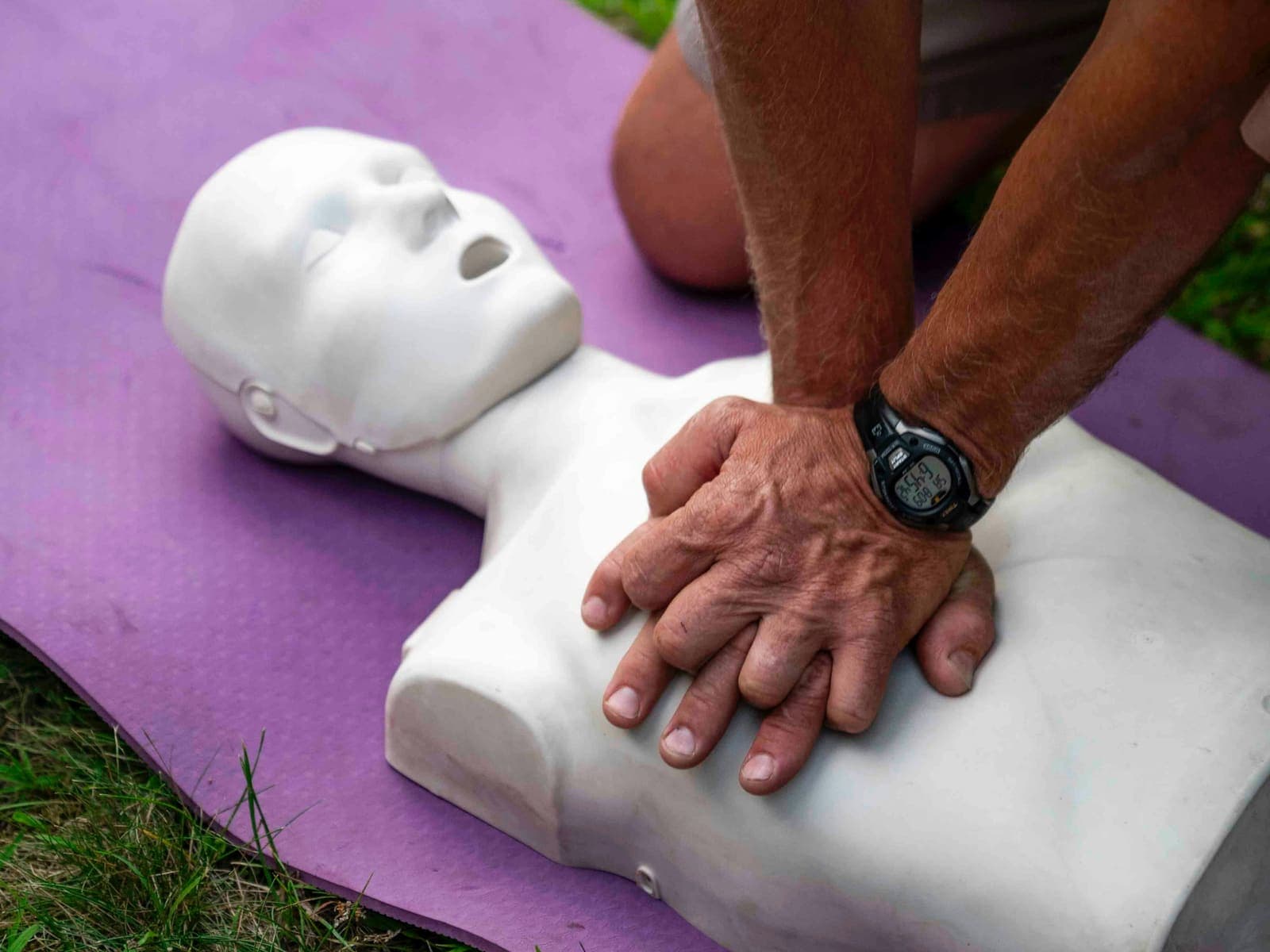
Illustration · Photo: Frederick Shaw / Unsplash
The same OHS training for everyone is rarely effective. Miners, smelter operators, drilling crews, and plantation workers face different risks, and they remember material more easily when it relates directly to their daily work.
That is why we start by studying the work on site: the processes, the main hazards, past incidents, and the health facilities and referral routes available. From there we build the material and case examples, so participants practise for situations they may actually encounter.
Beyond the content, the way it is delivered also has to fit. Sites on a roster system have crews rotating in and out. Training held only once will miss most of the workforce.
We schedule training around roster rotations and shift patterns, with session lengths that are realistic for workers who have just finished or are about to start a shift. Material is split into short modules, so it can be repeated for each crew without disrupting operations.
The language and examples are also adjusted to the participants. Training for supervisors, for example, puts more weight on spotting danger signs in their team members and knowing when to stop work.
At a site far from a hospital, the first minutes after an accident are critical. First aiders in each area need the skills to assess a casualty, control bleeding, perform CPR, handle burns and fractures, and recognise conditions that need urgent referral.
Our first aid training emphasises practice with manikins and training aids, then tests it through simulated incidents at the workplace. The contents and placement of first aid kits are reviewed too, because skills are of little use without equipment that is ready.
Emergency procedures that exist only on paper often fail when they are needed. We help draw up and rehearse the medical emergency response: who gives first aid, who calls the clinic or ambulance, the evacuation route, and coordination with the referral facility. Simulations are run with the site team, then reviewed to improve the procedure.
Many health risks on site can be reduced when workers understand their causes and early signs. That is why we also run short education sessions on topics chosen from the risks on site, for example:
These sessions can be slotted into safety talks or shift handover meetings, so they do not take up long stretches of working time.
Skills that are rarely used fade quickly. We recommend regular refreshers, especially for first aid and emergency response, as well as training for new workers who join mid-project. Attendance and assessment results are kept for each participant, so the company knows who is trained in each area and when their training needs repeating.
Beyond training, we support companies in managing occupational health risks: reviewing existing risk assessments, helping write procedures, and aligning the training program with findings from our occupational health and onsite clinic services.
ADR Medika is a new company, founded in 2026. We do not claim participant numbers or programs we have not yet run; the training scope, assessment method, and results reporting are written clearly from the start.
How it works
Location, workforce size, and the work pattern at your site.
We review site readiness and the relevant services.
A clearly defined scope and pricing.
A mobilisation schedule agreed together.
Services run and are reviewed regularly.
Built for these sectors
Participants receive a statement of attendance from ADR Medika. For certifications required by regulation, for example for certain OHS officers or experts, the provider must meet the applicable requirements. We tell you from the start whether a program falls under such a scheme, and we do not promise certificates we are not authorised to issue.
Yes, and it is often better that way. Practising at the workplace uses the equipment, evacuation routes, and conditions participants will actually face. If space on site is limited, some of the theory can be delivered elsewhere.
Training is scheduled around the roster, so every crew gets a chance without being called in during their time off. The same module can be repeated over several sessions so every crew takes part.
Assessment is practical, not just a written test. Participants have to demonstrate the skill, for example performing CPR on a manikin or carrying out an emergency procedure in a simulation. Results are recorded for each participant and reported to the company.
Regulations
Where and when to report a work accident in Indonesia: stage I and II reports within 2 x 24 hours, JKK claim papers, late-report risk, and site clinic evidence.
Medical staffing
Indonesian rules require emergency competence, not a course brand. How to pick valid BTCLS and ACLS training and schedule it for site clinic teams on roster.
Regulations
When Indonesian rules call for an Ahli K3 Umum (general OSH expert), how long an appointment lasts, what the expert reports, and the P2K3 secretary role.
Tell us the location, headcount, and work pattern. Our team will scope it realistically.
Discuss your site's needs