
 ID
 EN
 中文
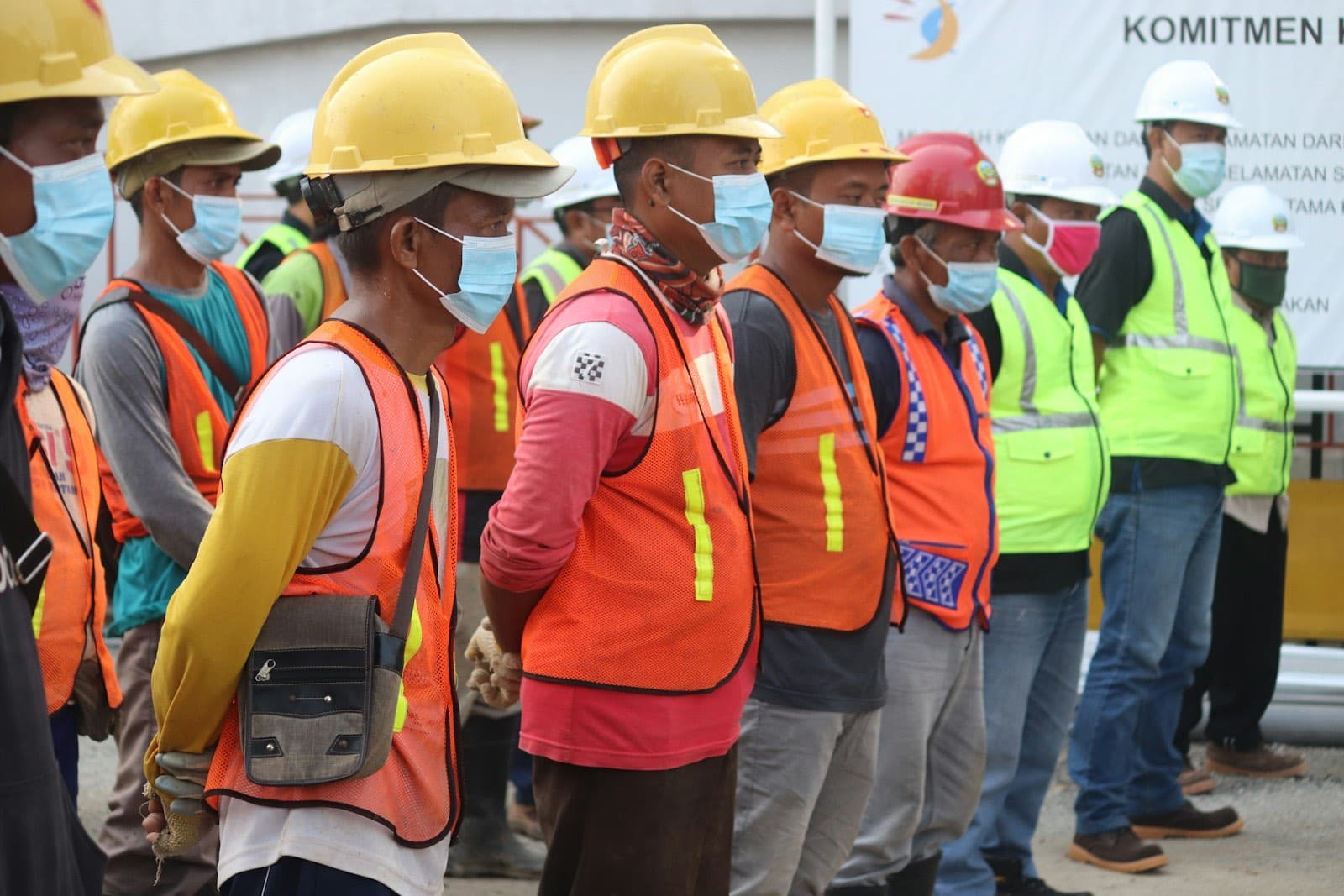
PKWT (fixed-term employment agreement, perjanjian kerja waktu tertentu) workers, daily casual workers (pekerja harian lepas), and outsourced workers (pekerja alih daya) must all be registered with BPJS Ketenagakerjaan by their employer. So yes: PKWT and daily casual workers are among those who must be registered. The contract status is not an exception in the texts we read, and the required programs follow the employer's business scale, not the contract type (Perpres 109/2013 Article 6). What differs is who the employer is: for PKWT and daily casual workers, the company that signs the employment agreement; for outsourcing, the outsourcing company (perusahaan alih daya), because the employment relationship sits with it (Law 13/2003 Article 66(1) and (2) as amended by Law 6/2023). The principal company (perusahaan pemberi pekerjaan) is not the employer, but Permenaker 7/2026 Article 4(3) makes it responsible for ensuring that outsourced workers' protection and rights are met.
This article is for HR, HSE, and site management working with contractors or labor providers. Contribution rates are not covered, and the accident reporting procedure is in work accident reporting and JKK claims. Other regulations in this field are mapped in the occupational health regulation map.
Who must register PKWT, daily casual, and outsourced workers?
The general basis is Article 15(1) and (2) of Law 24/2011: the employer must register itself and its workers as participants, in stages, with complete and correct data. PP 44/2015 Article 4(1) restates this for JKK (work accident insurance) and JKM (death insurance). Under that regulation a worker is anyone who works and receives wages or other remuneration (Article 1 point 5).
| Worker status | Who must register | Basis |
|---|---|---|
| PKWT based on a period or completion of a certain job | The company that made the employment agreement | PP 44/2015 Article 4(1); Permenaker 5/2021 Article 3(1) |
| Daily PKWT or daily casual (wage by attendance) | The company that employs them; social security rights must be met | PP 35/2021 Article 11(3) |
| Piece-rate or output-based (borongan) | The company that employs them | PP 44/2015 Article 19(4) (wage base for contributions) |
| Outsourced worker | The outsourcing company, as the party to the PKWT or PKWTT (permanent) agreement | Law 13/2003 Article 66(1) and (2); PP 35/2021 Article 18 |
| Daily casual, piece-rate, and PKWT workers in construction services | The construction employer, required for JKK and JKM | PP 44/2015 Article 53; Perpres 109/2013 Article 6(4) |
Permenaker 5/2021 as amended by 1/2025, Article 1 points 17 to 19, gives separate definitions for daily casual workers (wage by attendance), piece-rate workers (wage by volume or output), and PKWT workers.
PP 35/2021 Article 10(1) to (4) limits daily PKWT: work that varies in time and volume, with wages by attendance, and under 21 days in a month. If it runs 21 days or more for three consecutive months or longer, the agreement becomes a PKWTT. This does not change the duty to register, but it changes how you read the worker's status.
Which programs are required for contract workers?
Perpres 109/2013 Article 6(2) and (3) sets the required programs by the employer's business scale, not by the worker's contract type:
| Employer's business scale | Required programs |
|---|---|
| Large and medium | JKK, JHT, JP, and JKM |
| Small | JKK, JHT, and JKM |
| Micro | JKK and JKM |
| Construction services with daily casual, piece-rate, or seasonal workers | JKK and JKM (paragraph 4) |
JKK is work accident insurance, JKM death insurance, JHT old age insurance, and JP pension insurance. We took the JP duty from Perpres 109/2013; we did not read the separate government regulation on the JP program. We also found no amendment to Perpres 109/2013 in our search, but check again before relying on it.
For calculating contributions, PP 44/2015 Article 19 uses the monthly wage. If wages are paid daily, the daily wage is multiplied by 25 (paragraph 3). For piece-rate or output-based pay, it is the average of the last 3 months (paragraph 4). For weather-dependent work paid by piece rate, it is the average of the last 12 months (paragraph 5).
What does the principal company owe at the site?
Outsourcing now has its own implementing rule. Constitutional Court ruling 168/PUU-XXI/2023 (operative point 6) held that Article 64(2) of Law 13/2003 (the Law 6/2023 version) conflicts with the 1945 Constitution and is not binding unless read to mean that the Minister sets part of the work according to the types and fields of outsourced work agreed in the written outsourcing agreement. Separately, Permenaker 7/2026 on Outsourced Work was issued and promulgated on 30 April 2026.
What Permenaker 7/2026 says that touches BPJS:
- Fields of work. Article 3(2) lists cleaning, food and beverage, security, drivers and worker transport, operational support services, and supporting work in mining, oil, gas, and electricity.
- Agreement contents. Article 4(1)(e) requires the outsourcing agreement to set out workers' protection and rights, including occupational safety and health and social security.
- Who bears it. That protection is the outsourcing company's responsibility (Article 4(2)). The principal company is responsible for ensuring the outsourcing company meets it, at least as the law requires (paragraph 3).
- Proof of recording. The agreement is recorded with the local manpower office within 3 working days of signing, and the office may suspend issuing the proof if Article 3(2) or Article 4 is not met (Article 5).
- Sanctions on the principal company. Breaching Article 3 brings a written warning and restriction of business activities, in stages (Article 8).
- Transition. Existing agreements remain valid until they end, and their types and fields must comply within 2 years of promulgation at most (Article 10).
The text we read has no article that specifically mentions BPJS registration. The duty comes in through the "social security" item in Article 4(1)(e). We read Permenaker 7/2026 from the PDF on the JDIH Ministry of Manpower site, whose page marks this text as in force (Berlaku).
For contractors who take on a job package (pemborongan, not outsourced labor supply), we found nothing in the texts we read that puts a duty on the site owner similar to Article 4(3). Our opinion: write proof of membership into the contractor contract, so the site owner has a basis to refuse entry to workers who are not registered. How other occupational health duties are split between site owner and contractor is covered in contractor occupational health on site.
What if a worker is unregistered when an accident happens?
An employer that has not enrolled its workers in JKK must pay the worker's rights under PP 44/2015 if a risk occurs (Article 27(1)). The same applies to JKM (Article 35(1)). The one who bears it is the employer under the employment agreement, which for outsourced workers is the outsourcing company. How the site owner and the outsourcing company split that burden is a contract matter between them, and Permenaker 7/2026 stresses the duty to ensure rights are met. How treatment costs are split between JKK and BPJS Kesehatan is covered in work accidents: JKK, BPJS Kesehatan, or the employer.
Points often missed:
- Workers can register themselves. If the employer is clearly negligent, the worker may register with an employment agreement or other proof, an ID card (KTP), and a family card (KK) (Article 10(1) and (2)). The elucidation of Article 10 says proof of employment can be an attendance list and wage slips. "Clearly negligent" means not registered within 7 working days of starting work.
- Membership starts when the number is issued. BPJS issues the membership number within 1 working day of a complete registration and the first contribution (Article 6(2) and (3)). The first day of work is not the start of membership.
- Data changes must be reported. The employer reports data changes to BPJS within 7 working days; if not reported, benefits are calculated from the last data BPJS received (Permenaker 5/2021 as amended by 1/2025, Article 4).
- Changing the outsourcing company. An outsourcing PKWT must provide for the transfer of rights protection when the outsourcing company changes and the job remains (PP 35/2021 Article 19(1)). For participants who move to a new workplace, the employer at the new workplace must continue the membership by reporting the participant card and paying contributions from the day the worker starts there (PP 44/2015 Article 8(2)).
What are the sanctions if contract or outsourced workers are not registered?
Sanctions for not registering or not giving complete and correct data are set separately from sanctions for breaching PP 44/2015:
| Basis | Sanction | Imposed by |
|---|---|---|
| Law 24/2011 Article 17; PP 86/2013 Article 5 | Written warning, fine, and not receiving certain public services | The first two by BPJS; the third by the government or regional government at BPJS's request |
| PP 86/2013 Articles 6 and 7 | Written warning at most 2 times, each up to 10 working days; a fine for up to 30 days from the end of the second warning | BPJS Ketenagakerjaan |
| PP 86/2013 Article 9(1) | Certain public services: business-related permits, project tender permits, foreign worker (TKA) permits, permits of labor provider companies, and IMB (the term used in the text) | Government or regional government |
| PP 44/2015 Articles 59 and 60 | The same sanctions for breaches of Article 27(1), Article 35(1), Article 43(1) and (3), Article 53, and others | BPJS and relevant agencies |
| Law 24/2011 Article 55 | Imprisonment of up to 8 years or a fine of up to Rp1,000,000,000 for employers who breach Article 19(1) or (2), meaning collecting and remitting contributions | Criminal process |
After sanctions are imposed, BPJS reports non-compliance to the labor inspectorate (PP 44/2015 Articles 61 and 62). The sanction of losing public services, namely project tender permits and labor provider permits, is felt most by contractors and outsourcing companies. Note also that the criminal provision in Article 55 of Law 24/2011 targets breaches of the duty to collect and remit contributions (Article 19(1) and (2)), not the duty to register.
How does this connect to JKK claims at the site clinic?
A JKK claim starts with the employer reporting, and the stage I report must be filed within 2 x 24 hours (see work accident reporting). For outsourced workers, the reporter is the outsourcing company as employer, so the site owner has to make sure the incident information reaches it on time. Our practical suggestions:
- Site entry requirement. Ask for a copy of each contractor worker's membership card or number before induction, and keep the list at the clinic or HSE.
- One contact per contractor. Name the person who receives accident news and sends the stage I report, especially at crew changes.
- Clinic records. The site clinic records the chronology and first actions for every worker on site, including contractor workers, so the outsourcing company has material for its report. A picture of clinics at mining sites is in site clinics at mines. Sick notes from the clinic and pay while a worker cannot work are covered in sick notes and sick pay for workers.
- Health examinations. In determining an occupational disease case, the labour inspector may request the results of initial and periodic health examinations as supporting data (Permenaker 5/2021 as amended by 1/2025, Article 12(2)). See periodic MCU for mine workers.
- Occupational disease. A worker diagnosed with an occupational disease is entitled to JKK benefits even after employment has ended, if the disease arises within 3 years after employment ends (PP 44/2015 Article 48(1) and (2)), so records of departed contract workers should be kept. Reporting is covered in reporting occupational disease.
In an SMK3 audit, work accident claim records are among the documents requested (criterion 10.1.4 in the article SMK3 PP 50/2012). In areas with many contractors, each company's representation also needs to be considered in the P2K3 (Article 6(3)).
What about the new Employment Protection Law?
We have not read the promulgated text, so this article does not assess its effect on the rules above.
Checklist before contractors or contract workers start
- The employment or outsourcing agreement is written and mentions social security.
- JKK and JKM membership numbers, plus JHT and JP where required by business scale, exist for every worker.
- Wages reported to BPJS match actual wages, with the correct daily or piece-rate base.
- The list of people on site matches the participant list, including new and replacement workers.
- The accident reporting contact at each company is named.
- The outsourcing agreement is recorded with the manpower office and fits the fields in Permenaker 7/2026.
- The site owner's contract sets out proof of membership and the consequence if it is not provided.
- Changes of contractor or outsourcing company provide for transfer of rights protection.
Common mistakes
- Treating contract workers as non-participants. The texts we read make no exception for PKWT, daily casual, or outsourced workers.
- Assuming the site owner has no stake in membership. For outsourcing, Permenaker 7/2026 Article 4(3) makes the principal company responsible for ensuring rights are met.
- Delaying registration until the worker passes an initial period. Negligence is counted from 7 working days after starting work, and membership only applies once the number is issued.
- Reporting wages below actual wages. PP 44/2015 Article 32(2) puts the shortfall on the employer.
- Not keeping proof of employment. Attendance lists and wage slips matter if a worker has to register themselves.
- Leaving the reporting contact empty at roster changes. A late report shifts the JKK benefit to the employer.
How can ADR Medika help?
Through our occupational health service, we help record workers' health examinations according to the risks of their jobs and prepare reports for the HSE team and management, including for contractor workers on the same site. We do not register workers with BPJS Ketenagakerjaan and do not process JKK claims on behalf of the company; both remain the employer's duty. We are a company founded in 2026. We do not claim results that have not happened yet, and the scope of work is agreed together from the start.