ID
ID EN
EN 中文
中文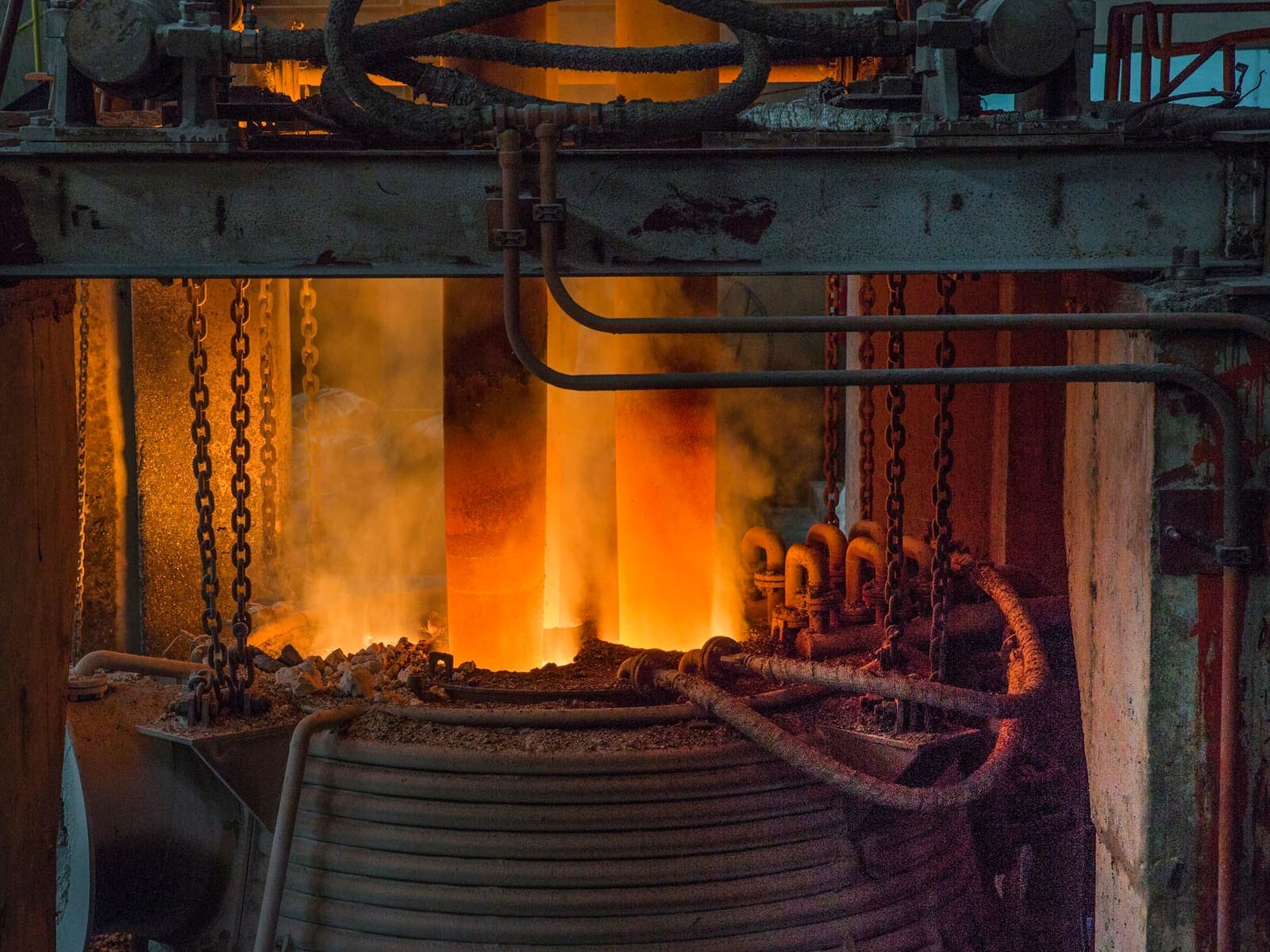
Heat stress is the heat load the body takes on from the work environment and from physical work itself. At a smelter, the heat sources almost never stop: furnaces run around the clock, molten metal moves every shift, and workers must stay in full protective clothing. Without controls, that load can lead to illness ranging from a skin rash to a medical emergency.
This article is written for HSE teams, supervisors, and site medical staff. It covers why smelters carry a high risk, which signs to recognise, how to monitor the work climate under Indonesian regulations, and which controls can run every day.
Why smelters carry a high risk
In nickel processing areas such as Morowali and Weda, furnace work combines several heat sources at once.
- Radiant heat. Furnaces, tapping channels, and molten metal radiate heat straight onto the body, even when the surrounding air does not feel extreme.
- Hot, humid air. A coastal tropical climate means the air is already warm and humid in the morning. Sweat evaporates less easily, so the body loses its main way of cooling down.
- Heavy PPE. Heat-resistant clothing, face shields, gloves, and safety boots are mandatory, but they also trap body heat inside the clothing.
- Physical work and long shifts. Clearing slag, changing equipment, and handling material all take heavy effort. Long shifts and tight rosters add to the cumulative load.
That is why heat stress at a smelter cannot be handled with a simple "drink more water" reminder. Controls have to be planned, measured, and supervised.
Signs and stages of heat-related illness
Heat-related illness comes in stages. Recognising the early signs gives the team a chance to act before the condition gets worse.
- Heat rash. Clusters of small red spots or tiny blisters, usually on the neck, upper chest, elbow creases, and groin. It appears when heavy sweating meets hot, humid air.
- Heat cramps. Painful muscle cramps or spasms in the abdomen, arms, or legs in workers who sweat heavily during hard work. Cramps can also be an early sign of heat exhaustion.
- Heat exhaustion. Headache, nausea, dizziness, weakness, irritability, thirst, very heavy sweating, and reduced urine output. The worker needs to leave the hot area right away and be assessed by medical staff.
- Heat stroke. The most serious stage: the body can no longer control its temperature. Signs include confusion, slurred speech, changed behaviour, seizures, or loss of consciousness. The skin may feel hot and dry, but the worker may also still be sweating heavily.
The list above helps teams recognise a pattern. It is not a tool for judging your own condition or a coworker's. Any worker showing these signs should be assessed by the site medical team.
Monitoring the work climate with WBGT
People feel heat differently, so monitoring needs a shared measure. Indonesia's Minister of Manpower Regulation No. 5 of 2018 on occupational safety and health in the work environment uses the wet bulb globe temperature (WBGT) index, called ISBB in Indonesian. WBGT is calculated from dry air temperature, natural wet bulb temperature, and globe temperature, so humidity, air movement, and radiant heat are all taken into account.
The regulation requires the work climate to be measured and controlled at workplaces that have heat sources and/or inadequate ventilation. If the results exceed the threshold limit value (NAB), controls are mandatory. The work climate limits in the regulation's annex depend on two things: the workload and the share of each hour spent working.
| Work time in each hour | Light | Moderate | Heavy | Very heavy |
|---|---|---|---|---|
| 75%–100% | 31.0 °C | 28.0 °C | – | – |
| 50%–75% | 31.0 °C | 29.0 °C | 27.5 °C | – |
| 25%–50% | 32.0 °C | 30.0 °C | 29.0 °C | 28.0 °C |
| 0%–25% | 32.5 °C | 31.5 °C | 30.5 °C | 30.0 °C |
How to read it: the heavier the work and the larger the share of each hour spent working, the lower the permitted WBGT. A dash means that combination is not listed in the table. For heavy work, the highest listed share of work time is 50%–75% per hour.
In practice, measurements should be taken where workers actually stand, at the times and during the tasks that represent the hardest conditions. The results are then used to set work-rest schedules for each area and type of work, rather than being filed away as a report.
Controls in the field
The same regulation lists the control options: removing or replacing the heat source, isolating exposure, ventilation, drinking water, limiting exposure time, suitable work clothing, and PPE. Engineering controls at the heat source remain the most effective. Alongside them, the following steps can run every day.
Acclimatising new and returning workers
The body needs time to adapt to heat. NIOSH recommends that new workers start with no more than 20% of the usual exposure time on day one, then increase by no more than 20% on each following day. Workers who already have experience with the job can follow a schedule of 50%, 60%, 80%, and then 100% over four days.
This matters for sites that run on rosters. According to NIOSH, workers who are away from the heat for a week or more can lose much of their adaptation, so workers returning from roster leave should be treated as an at-risk group during their first days back.
Work-rest schedules
Work-rest schedules are built from WBGT measurements and workload, then posted in the work area so they are easy to follow. The heaviest tasks are best scheduled for cooler hours or rotated among several workers.
Drinking water and cooling areas
Provide cool drinking water within easy reach of the work area. Encourage workers to drink small amounts often, without waiting until they feel thirsty. Set up shaded or air-conditioned rest areas close to hot areas as well, so rest breaks actually lower the body's heat load.
Buddy system and the supervisor's role
Workers with heat-related illness often do not notice their own condition, especially once confusion sets in. With a buddy system, every worker keeps an eye on a coworker. Supervisors and workers need training to recognise the signs above and to know whom to call.
The role of the site clinic
The site clinic is the first point of contact when a worker is affected by heat. Its role can go well beyond waiting for patients to walk in:
- Pre-shift checks for at-risk workers, such as new workers, workers just back from roster leave, or those recently recovered from illness.
- Fast initial care: removing the worker from the hot area, cooling the body, and monitoring their condition.
- Referral to a better-equipped health facility when the worker's condition requires it, with routes and transport arranged in advance.
- Case records by area and type of work, so patterns become visible and can be reviewed with the HSE team.
This program can run alongside our occupational health service for hazard mapping and measurement, and an onsite clinic for day-to-day care at the site.