ID
ID EN
EN 中文
中文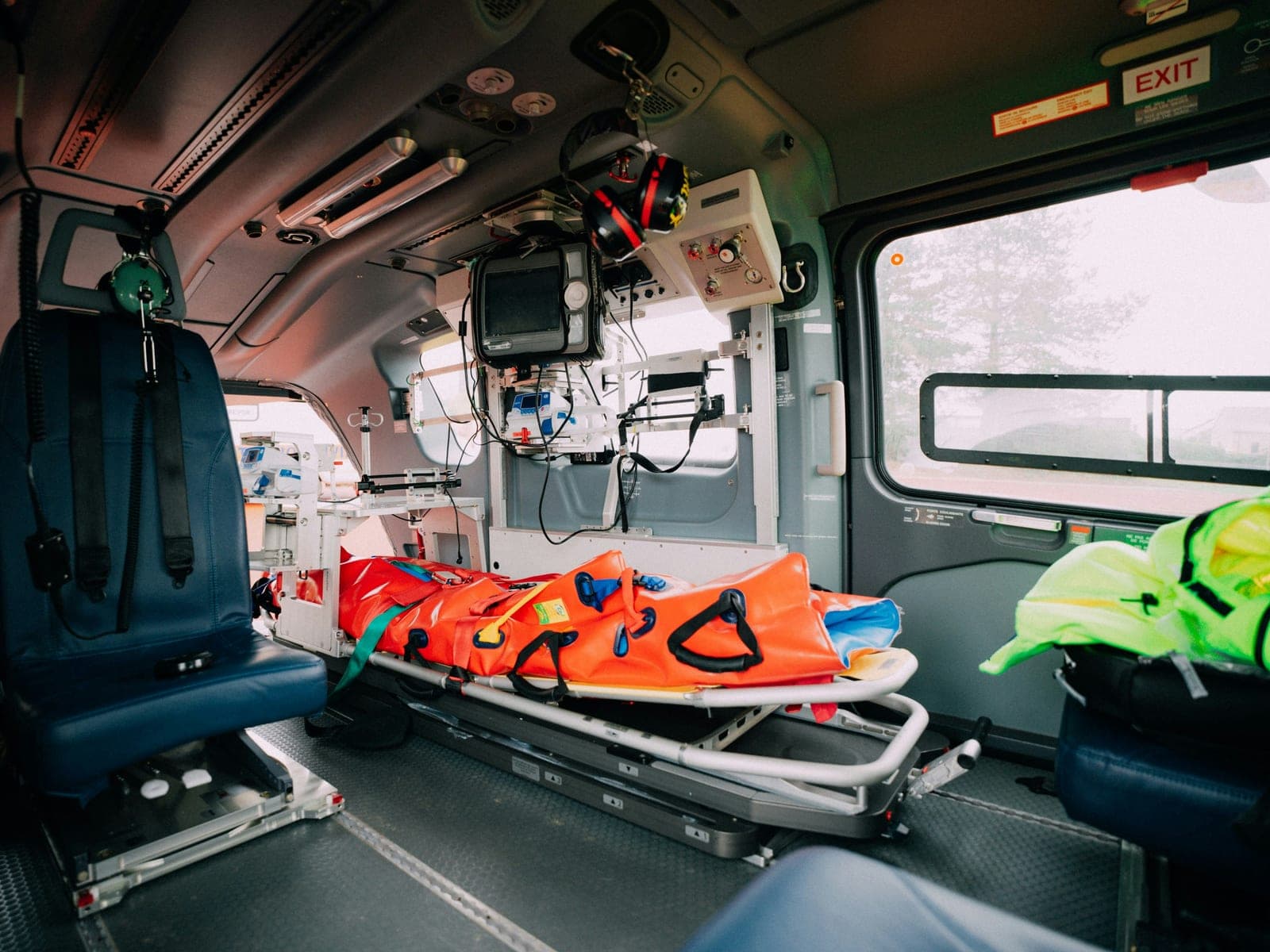
Indonesia's emergency services regulation, Minister of Health Regulation No. 47 of 2018, defines medical evacuation as moving a patient from the scene to the health facility their condition requires while keeping up resuscitation and stabilisation on the way. At a remote site, that work starts well before the aircraft or boat arrives. The site clinic stabilises the patient, calls the receiving hospital, picks a transport mode the patient can safely tolerate, prepares the paperwork, and sends a trained escort with equipment that has already been checked. The operator runs the aircraft or vessel, but those decisions belong to the site medical team.
This article is for site management, HSE teams, and site clinic medical staff.
What must a site clinic do when a patient needs referral?
Regulation 47/2018 splits emergency care into three stages: before the patient reaches a facility, inside the facility, and between facilities (Article 4(1)). Article 6 requires every health facility, clinics included, to handle the last two, and Article 8 describes inter-facility care as referral to a more capable facility. For evacuation from the scene, Article 5(4) allows other available transport when no ambulance exists, provided resuscitation and stabilisation continue.
The annex to the regulation sets out how a clinic refers a patient. Before referral, the clinic coordinates with the receiving facility on the patient's condition and the treatment they need. The patient travels once stable, in an ambulance fitted with resuscitation equipment, escorted by a health worker trained in resuscitation, and carrying a referral letter. If the patient needs definitive treatment urgently and the clinic lacks the staff or facilities, the referral goes ahead immediately without a secondary survey.
Regulation No. 11 of 2025 also requires occupational health clinics to hold a medical evacuation equipment set and emergency drugs. Rooms, ambulances, and staffing for site clinics are covered in our article on mine site clinics.
How do you keep the patient stable while waiting for transport?
The national Guidelines for Handling Medical Evacuation (Minister of Health Decree No. 882/Menkes/SK/X/2009), still listed as in force on the Ministry of Health legal database, rest on one principle: the patient leaves in a stable condition, unless the vehicle, equipment, and accompanying staff allow resuscitation and stabilisation during the journey. For flights, the guidelines say stabilising vital functions before departure largely decides whether complications arise in the air. A patient with breathing problems should be intubated before departure, because intubating during a flight is very difficult.
At a remote site, the wait can be long if the airstrip cannot be used at night, the weather turns, or the boat cannot come alongside. During that time the triage status is reassessed continuously, as the annex to Regulation 47/2018 requires. Record vital signs and treatment on a sheet that will travel with the patient.
An article on medical evacuation from the Ministry of Health's Directorate General of Advanced Health Services reminds readers that evacuation should go ahead only when the patient is expected to benefit, and should be postponed when the risk is greater. At a clinic, the doctor is responsible for emergency care (Article 12, Regulation 47/2018), so the decision is theirs, with the reasons written down.
Road, sea, or air: how do you choose at a site with no airport?
Decree 882/2009 recognises road ambulances, water ambulances (sea, river, and lake), and air ambulances, both fixed-wing aircraft and helicopters. For day-to-day referrals, the type of transport is chosen based on the patient's condition, the position of whoever pays, and what is available.
From a site with no airport, the route may combine several legs: a mine road to a jetty, a boat to a port town, then a flight. Each transfer point adds another lift and more waiting. Work out the travel time for each leg by day and by night.
| Mode | What to confirm | Notes from Decree 882/2009 |
|---|---|---|
| Road ambulance | Road passable in rain and at night, stretcher fits | Every road ambulance carries a local map |
| Boat | Space for a stretcher, an escort who can treat on the way | At least basic life support equipment, standard rescue equipment, and staff who can provide medical care on the journey |
| Helicopter | Helipad and a safe approach path | Patient carried in from the front after the pilot signals; ear protection for the patient, eye protection as the helicopter lands |
| Charter aircraft | Nearest airstrip, ambulance at the destination airport | Road transport from airport to hospital arranged clearly |
| Commercial flight | Patient stable, oxygen and equipment agreed with the airline | Airline oxygen cylinders cannot meet the needs of a patient on assisted ventilation |
The same guidelines point to vibration and noise on aircraft, and to medical device batteries that must be charged before the trip because they do not last long. The medical evacuation service standard in Regulation 11/2025 requires electrical medical devices on air ambulances to run on their own batteries rather than aircraft power.
What should the receiving hospital hear before departure?
Coordinating with the receiving hospital is a referral requirement under the annex to Regulation 47/2018. For referrals from hospitals, the annex adds that the sending facility must have confirmation that the destination is ready to receive the patient. Site clinics should hold themselves to the same standard.
Decree 882/2009 lists the initial information to pass on before evacuation:
- the patient's condition at departure (diagnosis);
- medical treatment already given;
- departure time;
- equipment and procedures needed at the receiving hospital.
The evacuation time is also agreed with and communicated to the receiving hospital. Decide who will call if there is a delay at the jetty or airstrip.
Which documents travel with the patient?
- a referral letter from the clinic doctor;
- an identity document (Indonesian ID card, passport, or driving licence) and a photocopy;
- medical notes from before departure: airway, breathing, circulation, and disability status, symptoms, and drugs and treatment given with their effects;
- a sheet for recording treatment during the journey;
- the name of whoever pays, such as the employer or an insurer.
Decree 882/2009 asks for medical notes before, during, and up to arrival, plus notes on how the evacuation was managed. The American College of Critical Care Medicine guideline (Warren et al., 2004) also includes monitoring during transport and documentation in the transport plan.
Who escorts the patient, and with what skills?
Decree 882/2009 requires every emergency evacuation to be escorted by skilled staff, meaning a doctor or nursing staff. Doctors need General Emergency Life Support (GELS), Advanced Life Support (ALS), oxygen therapy management, and disaster management. Nurses need Basic Life Support (BLS), emergency nursing care, and stabilisation and evacuation techniques. Ambulance drivers need BLS and evacuation techniques.
As a good-practice benchmark, Regulation 11/2025 sets minimum crew levels for medical evacuation service businesses: one doctor competent in basic and/or advanced life support, and two nurses competent in basic life support. For air ambulances, both also need air evacuation competence. These numbers bind evacuation service companies, not site clinics, but they help when judging whether one escorting nurse is enough.
An escort who leaves site may only get back on the next boat or flight, and the clinic is one person short until then. The roster needs cover for that gap, as explained in our article on calculating medical staff for rosters.
What goes in the evacuation bag, and when is it checked?
Decree 882/2009 requires evacuation supplies to be prepared in full and checked periodically: maintenance schedule, charged batteries, expiry dates, and quantities of equipment, drugs, and consumables. The minimum is a stretcher, an oxygen cylinder with its fittings, a suction unit, and life-saving drugs and equipment. An ECG monitor, IV fluids, a communication device, and recording forms are recommended additions. The quantity of each item is matched to the patient's needs or the complications expected.
We suggest sealing the site clinic's evacuation bag with its contents list on the outside, checking it on a schedule and after every use, and recording the checker's name and the date. Calculate oxygen for the longest likely route, including waiting time at the jetty or airstrip. The chain before the clinic, from first aiders to the stretcher that brings the casualty in, is covered in our article on workplace first aiders.
When is a medical escort enough for a stable patient?
A worker who is stable after treatment can be sent home on a commercial flight. Decree 882/2009 notes the limits of scheduled flights: equipment and drugs are hard to arrange, and airline oxygen cylinders are not enough for a patient who needs assisted breathing. This option is therefore only for patients who are genuinely stable, with advice from the treating doctor on their condition and prognosis during the journey. A medical escort watches the patient throughout, carries their medication and medical notes, and hands them over at the destination.
What goes into a scenario-based medical evacuation plan?
Warren et al. recommend a written transport plan covering pre-transport coordination and communication, personnel, equipment, monitoring, and documentation, developed by a multidisciplinary team and reviewed regularly. A remote site needs a similar plan before anything happens, with each case type matched to what the receiving facility can handle, as Decree 882/2009 requires.
Each scenario in the plan should set out:
- the receiving hospital for each case type, such as major trauma, burns, or chest pain, and what that hospital can do;
- the primary and backup transport mode, with day and night travel times for each leg;
- 24-hour numbers for the receiving hospital, the transport operator, and whoever pays;
- a current operator contract, including how to activate it outside office hours;
- who decides to evacuate, who makes the calls, who escorts, and who covers at the clinic;
- the document list and the evacuation bag contents.
Test the plan in drills, and update it whenever the route, operator, or referral hospital changes.
Our medical center service covers drafting referral procedures, staff rosters that allow for evacuation escorts, and medical escorts.