 ID
 EN
 中文
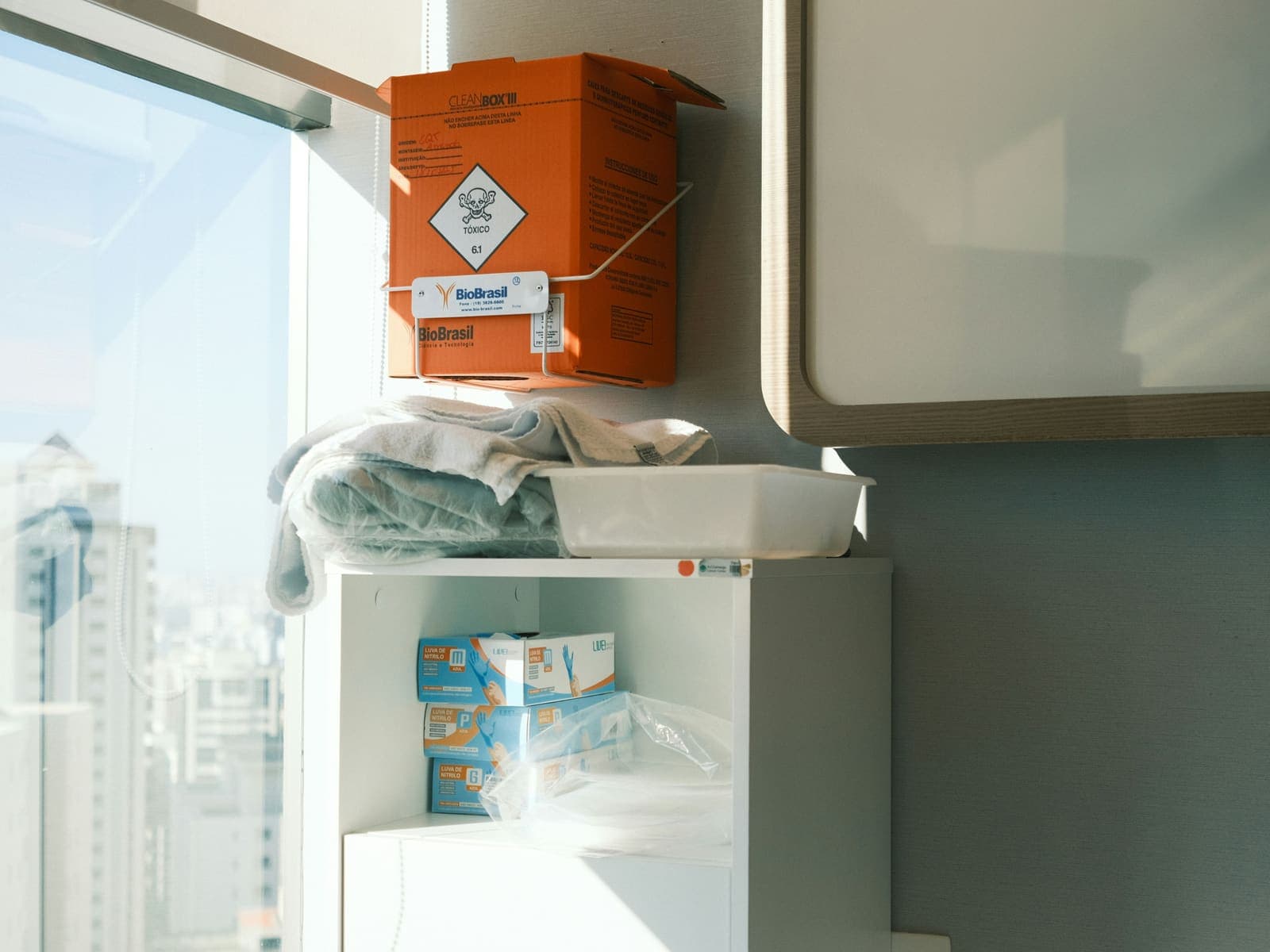
A site clinic handles medical waste in the same sequence as a clinic in town: waste is segregated where it is produced, kept in a hazardous waste store, shipped out with the right documents, and treated by a licensed party. What changes at a remote site is timing. Under Minister of Environment and Forestry Regulation (PermenLHK) No. P.56/Menlhk-Setjen/2015, infectious, sharps, and pathological waste may be stored for no more than 2 days above 0 °C, or 90 days at 0 °C or below. If the boat or truck that collects waste only calls every few weeks, a dedicated waste freezer is a necessity.
This article is for site management, HSE, environmental teams, and clinic managers.
Which regulations apply to a site clinic?
- P.56/2015 covers clinics (Article 3(2)(b)) and is listed as in force on peraturan.go.id. It still uses the older term "hazardous waste management permit".
- PermenLHK No. 6 of 2021, which implements Government Regulation (PP) No. 22 of 2021, now bases waste storage either on standards built into the business identification number (NIB) for activities that only need an environmental management statement (SPPL), or on technical details in the Environmental Approval (Persetujuan Lingkungan) for activities that need an AMDAL or UKL-UPL (Article 51(4)). Confirm with the local environmental agency which basis applies to your clinic.
- Minister of Health Regulation (Permenkes) No. 3 of 2026, Article 62, sets the stages for solid medical waste and allows cooperation with other parties for collection, transport, treatment, and final disposal. Its Article 99 revokes Permenkes 18/2020 except Articles 8, 11, and 17 and the Annex, and revokes Permenkes 2/2023 except for certain articles. Many guides online still cite both as if they were fully in force.
- Permenkes No. 11 of 2025 limits an occupational health clinic (Klinik Kesehatan Kerja) to controlling and handling the hazardous waste it produces, "not including transport, treatment and destruction". Waste management through a third party is evidenced by a cooperation agreement.
What kinds of waste does a site clinic produce?
Article 4 of P.56/2015 lists nine types of hazardous waste from health care facilities. Container colours are set in Article 7(3).
| Type | Examples at a site clinic | Container |
|---|---|---|
| Infectious | Gauze, dressings, gloves stained with blood | Yellow, infectious symbol |
| Sharps | Needles, scalpels, lancets | Puncture-resistant sharps box (safety box) |
| Pathological | Tissue from minor surgical procedures | Yellow |
| Pharmaceutical | Expired or damaged medicines | Brown |
| Chemical | Expired reagents, spills, leftover packaging | Brown |
| High heavy-metal content | Mercury thermometers or blood pressure gauges | Separate, labelled |
| Gas cylinders or pressurised containers | Cylinders that do not go back to the supplier | Separate, labelled |
Radioactive (red) and cytotoxic (purple) waste are rare at site clinics. Oxygen cylinders still in service go back to the supplier for refilling, as covered in our article on medical oxygen cylinders. Expired medicines only need to be separated into a brown container and recorded; how to destroy them is covered in managing medicines at a site clinic. Expired narcotics and psychotropics have their own destruction route, covered in our article on storing narcotics and psychotropics at a clinic. Who is responsible for medicines at a clinic is set out in the pharmacist's role at a clinic. Mercury-containing devices such as thermometers fall under heavy-metal waste, while calibration and maintenance schedules for other medical equipment are covered in calibrating and maintaining medical equipment.
The WHO handbook describes the three-bin system (infectious, sharps, general) as the minimum standard, with extra containers for pharmaceutical and chemical waste. WHO also advises sealing bags and sharps containers once they are three quarters full, and notes that many needlestick injuries happen when needles are recapped before disposal. That is why we suggest placing sharps boxes as close as possible to where procedures take place.
How long can infectious waste be stored?
| Waste | Storage limit | Basis |
|---|---|---|
| Infectious, sharps, pathological | 2 days above 0 °C, or 90 days at 0 °C or below | P.56/2015 Article 8(2)(a) |
| Chemical, pharmaceutical, heavy metal, pressurised containers | 90 days if 50 kg or more is generated per day; 180 days if less than 50 kg per day for category 1 hazardous waste | P.56/2015 Article 8(2)(b) |
The clock starts when the waste is generated. A clinic that does not store its waste must hand it over within 2 days to a licence holder whose storage site serves as a transfer depot (Article 9).
Our suggested method: take the longest gap between two scheduled waste pickups, including rainy-season delays. If it is more than 2 days, infectious, sharps, and pathological waste go into the freezer from day one. Every bag is dated, the freezer temperature is logged each shift, and the freezer runs on backup power. WHO also advises remote facilities to plan for being cut off from collection services by floods and for power failures during extreme weather.
Where is the waste stored: the clinic's store or the company's?
The storage standard in PermenLHK 6/2021 Article 52 sets a baseline: waste is protected from rain and covered, the floor is impermeable, symbols and labels are in place, packaging is metal or plastic with a strong lid, and packaging is not leaking, rusted, or damaged. Article 51(3) prohibits generators from mixing the hazardous waste they store.
If the company already runs a hazardous waste store (TPS limbah B3), that does not automatically mean clinic waste can go there. Ask the company's environmental department whether clinic waste types are listed in its storage technical details, whether there is refrigerated space, and who keeps the waste balance. Article 80 requires hazardous waste records and the waste balance to be reported at least once every 6 months.
How does waste leave the site?
P.56/2015 Article 12 assigns transport outside the facility's work area to a licensed hazardous waste transporter. Every shipment must carry a manifest (Article 15) showing the manifest code; the name, source, characteristics, and quantity of the waste; the identity of the sender, transporter, and receiver; and the vehicle.
PermenLHK 6/2021 Article 99 requires every hazardous waste shipment to be accompanied by Festronik, the electronic manifest that the transporter fills in and the generator then confirms. The only exception close to site conditions is Article 100(a): "transport of hazardous waste by the hazardous waste generator carried out within the work area of the same business and/or activity and passing through public roads". Shipments to a treatment facility outside that work area are not mentioned in this exception.
For island sites, the Annex to Permenkes 18/2020, which remains in force, allows inter-island transport by water within one region, provided the waste is packed in a container that is stronger, safe, and leak-free. Shipments to a depot need a delivery note and a handover report; shipments straight to a treatment facility need a manifest. The clinic keeps a copy of every handover document.
Can waste be treated or buried on site?
There are three routes:
- Contract a licensed transporter and treatment facility, evidenced by a cooperation agreement.
- Use a treatment facility owned by the company. A camp incinerator used for general rubbish cannot automatically burn medical waste. P.56/2015 Article 17 requires a treatment licence for generators that treat their own waste thermally. PermenLHK 6/2021 Article 220 requires a Technical Approval (Persetujuan Teknis) and an Operational Feasibility Letter (SLO) for AMDAL or UKL-UPL activities that treat hazardous waste, and Article 128 requires incinerators to have at least two combustion chambers and air pollution control equipment. Autoclaves may not be used for pathological, pharmaceutical, chemical, radioactive, or cytotoxic waste (P.56/2015 Article 21).
- Limited burial. Only for pathological waste and sharps, only where there is no incinerator on site, and with approval from the head of the district or city environmental agency (P.56/2015 Articles 25 and 27). The pit must be flood-free, at least 1.8 m deep, at least 20 m from wells and housing, and fenced and marked (Article 26). Permenkes 3/2026 Article 62(2) likewise limits burial to areas without a medical waste treatment facility or to emergencies and disasters.
Under Permenkes 3/2026 Article 62, liquid clinic waste is treated in a wastewater treatment plant (IPAL), held in leak-proof containers, or handed to a licensed treatment company, and it must meet wastewater quality standards before discharge. If clinic wastewater drains into the camp IPAL, confirm with the environmental department that the plant was designed to take it.
What gets handed over at roster change?
The medic going off roster hands over to their replacement:
- the contents of the freezer and waste store, with the date of the oldest bag;
- the freezer temperature log and any power outages;
- the next waste pickup and any manifests not yet returned;
- stock of yellow and brown bags and sharps boxes;
- any needlestick injuries and their follow-up.
This list adds to the other clinic requirements covered in our article on mining site clinics.
Under our medical center service, our scope covers handling medical waste in line with regulations as part of facility management. At an onsite clinic, segregation, storage, handover schedules, and roster handover are written into the clinic's SOPs and records. Transport, treatment, and destruction of hazardous waste remain with licensed parties, not with us.