ID
ID EN
EN 中文
中文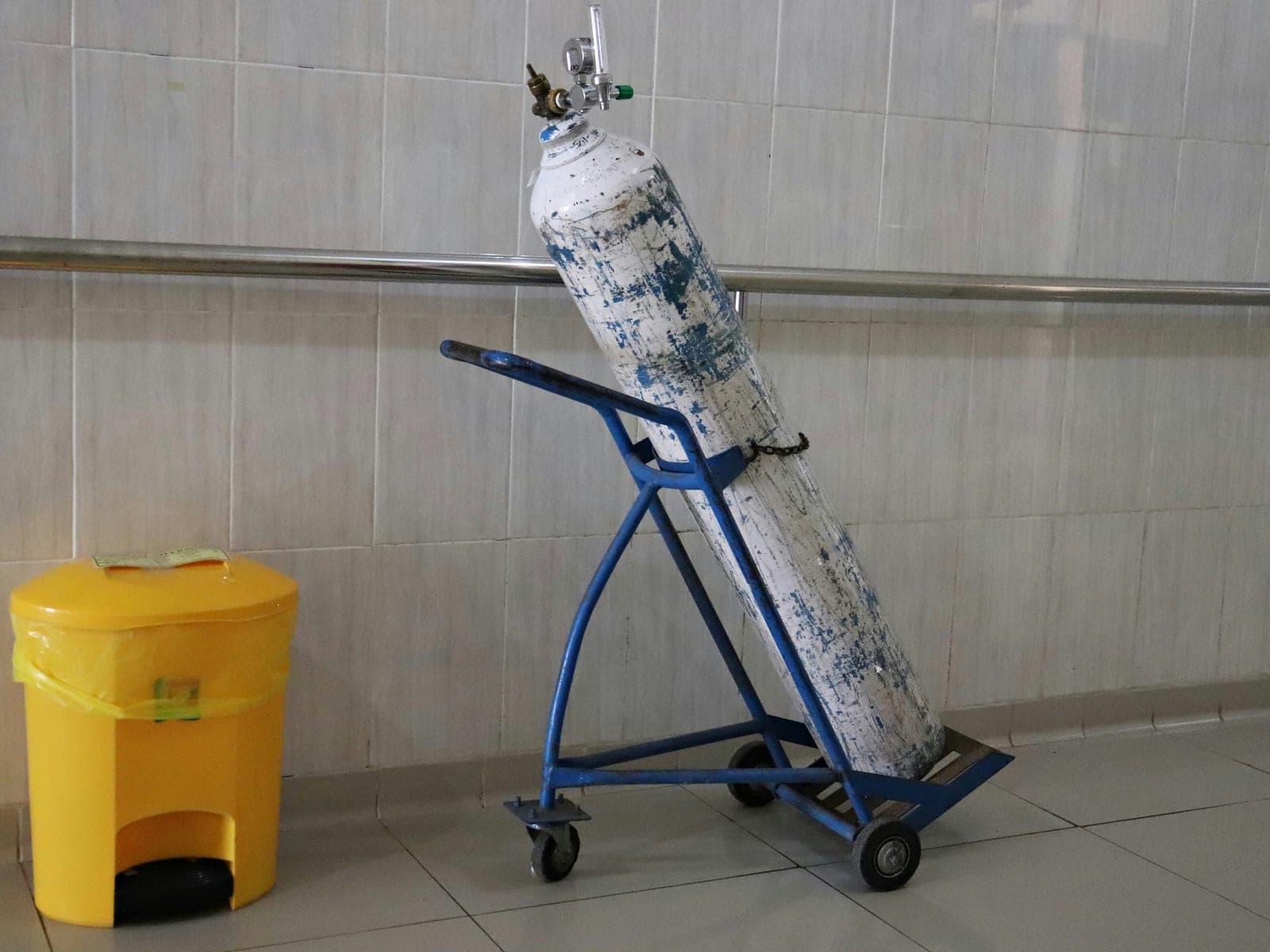
A medical oxygen cylinder for a site clinic has to meet three conditions: it must be a genuine medical gas cylinder, there must be enough of them for the patients kept at the clinic until evacuation arrives, and they must be stored safely. In Indonesia, Minister of Health Regulation (Permenkes) No. 4 of 2016 on the Use of Medical Gases and Medical Vacuum sets oxygen quality, cylinder fittings, and storage. Permenkes No. 11 of 2025 requires a primary clinic (Klinik Pratama) to keep at least 1 oxygen cylinder, and more than 1 if it has inpatient beds. That is a floor. At a remote site, the number you actually need comes from patient scenarios and how long you may wait for evacuation.
This article is for procurement teams, clinic managers, and HSE staff at sites far from hospitals and gas suppliers.
What do the regulations require of a site clinic?
The Klinik Pratama standard in Permenkes 11/2025 lists a medical gas system as part of the clinic's infrastructure, in four points: at minimum, oxygen must be available to treat emergency patients; there must be at least 1 cylinder, and more than 1 for a Klinik Pratama with inpatient care; cylinders are used in the treatment room and inpatient ward; and every cylinder in use must be confirmed fit for use. The minimum emergency kit of an occupational health clinic (Klinik Kesehatan Kerja) also includes oxygen.
Article 5(1) of Permenkes 4/2016 lists four ways to use medical gases: a medical gas pipeline system, medical gas cylinders, portable oxygen concentrators, and portable medical vacuum devices. Three other obligations are often overlooked:
- medical gases must be operated by staff competent in medical gases, or by a competent party appointed for the purpose (Article 6);
- their use must be documented and evaluated periodically (Article 7);
- medical gas cylinders and portable oxygen concentrators must be tested or calibrated periodically by an authorised testing institution (Article 8(3) and (4)).
One point needs checking before you design the clinic. Article 5(2) requires operating theatres, intensive care, and emergency rooms to use a medical gas pipeline system, while the Klinik Pratama standard only mentions cylinders. If your site clinic has an emergency room, ask the local health office (dinas kesehatan) what they will inspect during verification. Other clinic requirements are covered in our article on mine site clinics.
Medical oxygen and welding oxygen: are they the same?
The element is the same, but only medical oxygen has to meet the medical gas specification, which Permenkes 4/2016 defines as a gas with a special specification used for medical care. Annex I sets the oxygen content of manufactured oxygen at more than 99.5 percent, with impurity limits in ppm for substances such as carbon monoxide, carbon dioxide, and moisture. Oxygen from a concentrator must be at least 90 percent. The sources we read contain no specification for welding oxygen, so do not assume the two are interchangeable.
Under Annex II, medical oxygen cylinders are painted white and labelled, the oxygen valve has an internal thread, the cylinder head is sealed and protected, and the cylinder carries a valid test certificate. The label shows the company name, gas name, purity, contents volume, pressure, filling date, cylinder number, test due date, and gas properties. The WHO-UNICEF guidance points out that colour is only a guide: the ISO standard uses white for oxygen, while the United States convention uses green. The label is the primary identification of the contents, and a cylinder without a readable label goes back to the supplier. The same guidance says never to use an industrial gas cylinder for refilling medical oxygen.
If the site workshop uses oxygen cylinders for welding or cutting, we keep them separate from medical cylinders both physically and administratively, with different storage areas, ordering channels, and stock cards, so that a workshop cylinder never reaches the treatment room.
Medical oxygen cylinder sizes: what do 1 m3 and 6 m3 mean?
Every cylinder has two volume figures. Water capacity is the physical size of the vessel, and Annex II requires it to be stamped on the cylinder body along with the filling pressure. The contents on the label are the volume of gas at normal atmospheric pressure. Because the gas is compressed, the two figures are very different. WHO gives the example of a 47 litre cylinder whose contents expand to 6,800 litres of gas.
Market names such as "1 m3" or "6 m3" should be checked against the label and the supplier's data sheet: is the figure the gas contents, and at what filling pressure? If it is the gas contents, 1 m3 equals 1,000 litres. The usable amount is less than the full contents, because WHO says a cylinder whose gauge needle is already in the red zone should not be used.
Annex II also lists the accessories for each cylinder: tubing, a nasal mask, a regulator key and cylinder key, a trolley with a restraint, a cylinder guard, and a flowmeter with a maximum flow of 2.5 litres per minute for neonates and children and 10 or 15 litres per minute for adults. The regulator must match the valve type on the supplier's cylinders.
How many cylinders does a site clinic need?
At a remote site, an empty cylinder is only replaced when the next shipment arrives, so we calculate need from the worst realistic scenario:
- Agree a scenario with the site doctor, for example a transport vehicle accident with several casualties at once.
- Ask the doctor to set the flow rate per patient. This is a clinical decision, not a procurement figure.
- Set the duration: the longest wait until evacuation arrives plus the travel time, including at night and in bad weather.
- Calculate the need: number of patients × flow rate (litres per minute) × 60 × number of hours = litres of oxygen. Divide by 1,000 to get m3.
- Compare this with the usable contents per cylinder from the supplier's data sheet, then round up.
- Add portable cylinders for the ambulance and evacuation bag, plus cylinders that stay on site while empties are sent to the supplier.
Step 4 follows the WHO example for planning oxygen supply at COVID-19 treatment centres: number of patients multiplied by flow rate and 60 minutes gives litres per hour. We use the method only, not the example figures.
Annex II of Permenkes 4/2016 also states that when medical gas is supplied from cylinders, one cylinder serves one person only. So the number of cylinders ready to connect must be at least the number of patients receiving oxygen at the same time. Oxygen for the longest referral route is covered in our article on medical evacuation from remote sites.
Concentrator or cylinders for a site running on generators?
The WHO-UNICEF guidance compares the two sources:
| Aspect | Cylinder | Concentrator |
|---|---|---|
| Electricity | Not needed | Needs uninterrupted power |
| Supply | Depends on refilling and transport from the supplier | Concentrates oxygen from ambient air |
| Oxygen content under Permenkes 4/2016 | More than 99.5 percent (manufactured) | At least 90 percent |
| Maintenance | Daily and weekly user checks, cylinder maintenance by the gas supplier | Regular filter cleaning, annual checks |
| Drawbacks | Supply runs out, highly reliant on the supplier | Low output pressure, needs backup cylinders |
WHO advises facilities that use concentrators to keep cylinders as a backup supply. At sites on generator power, we recommend a concentrator as the everyday source when the power is stable, with cylinders as backup when the generator fails or is under maintenance. The road ambulance and the evacuation bag should still carry cylinders.
Under Annex II section B of Permenkes 4/2016, the filter of a portable concentrator is cleaned weekly in clean air and more often in polluted air, for example near construction work. Oxygen purity, flow rate, pressure, filters, and the electrical alarm are checked every year. Because Article 8(3) requires cylinders and portable concentrators to be tested or calibrated periodically, both belong on the schedule described in our article on calibrating and maintaining medical devices.
How should oxygen cylinders be stored safely?
Drawing on Permenkes 4/2016 and the WHO guidance, our storage checklist is:
- cylinders are stored upright, with valve protection, and secured with a restraining strap so they cannot fall when jolted;
- the storage area is dedicated, with each type of medical gas kept apart and marked;
- full and empty cylinders are kept apart, each labelled as full or empty;
- the area is away from heat sources, electrical equipment, and oil, with good ventilation;
- cylinder temperature must not exceed 52 °C;
- a valve cap is fitted when the cylinder is not in use or is being transported, and cylinders are moved on a trolley;
- a fire extinguisher is kept nearby and no smoking signs are posted.
Measure the temperature of any storage spot that gets direct sun or sits near a generator. When a shipment reaches the site, we inspect every cylinder before it enters stock: the label is readable and says medical oxygen, the seal is intact, the test date has not passed, and there is no leak, which WHO says shows as a hissing sound or falling pressure. Cylinder numbers go on the stock card so that each cylinder can be traced.
Our medical equipment service covers procurement of oxygen equipment, delivery to site, installation and function testing, scheduled maintenance, and inventory records for every cylinder and device. Oxygen refilling is done by the medical gas supplier, not by us.