 ID
 EN
 中文
Hydrogen sulfide (H2S) is dangerous for two reasons: it is highly toxic, and its rotten-egg smell disappears exactly when the concentration becomes high. The WHO assessment CICAD 53 reports that the sense of smell is paralysed above 140 mg/m³ (roughly 100 ppm) and that a few breaths at 700 mg/m³ (roughly 500 ppm) can be fatal. In Indonesia, Minister of Manpower Regulation (Permenaker) No. 5 of 2018 sets a threshold limit value (Nilai Ambang Batas, NAB) of 1 bds and a short-term exposure limit (Pajanan Singkat Diperkenankan, PSD) of 5 bds for H2S. A rescuer who goes in without respiratory protection can become the next victim.
This article is for HSE staff, site managers, and supervisors of high-risk areas. The ppm figures are our own approximate conversions using the factor in CICAD 53 (1 ppm = 1.4 mg/m³).
Where can H2S occur on a site?
H2S forms when bacteria break down organic matter without oxygen. The Indonesian competency standard (SKKNI) for H2S hazard handling, set by Minister of Manpower Decree (Kepmenaker) No. 244 of 2017, says the gas arises during drilling, production, and maintenance in oil, gas, and geothermal operations, and also in swamps and sewage channels. CICAD 53 adds volcanic gases, stagnant or polluted water, and poorly ventilated wastewater treatment facilities. According to ICSC 0165, the gas is heavier than air and may travel along the ground, so pits, trenches, and below-grade tanks deserve suspicion.
Before designing any training, we recommend mapping the H2S areas of each site:
| Area | Where the H2S comes from | Tasks to watch |
|---|---|---|
| Oil and gas wells and production facilities, especially sour wells | H2S naturally present in oil and gas | Drilling, well servicing, opening process equipment |
| Geothermal fields | Volcanic gases and geothermal fluids | Drilling, maintenance of pipes and separators |
| Wastewater treatment plants (IPAL), sewers, and control pits in industrial estates | Organic waste breaking down without oxygen | Cleaning pits, opening manholes, repairing pumps |
| Effluent ponds and biogas plants at palm oil mills | Biogas from palm oil mill effluent (POME) contains H2S at fluctuating concentrations | Maintaining digesters, scrubbers, and gas lines |
| Confined spaces: tanks, wells, excavations | Gas collects and cannot escape | Inspection, cleaning, rescue |
CICAD 53 notes that most fatal H2S cases have occurred in relatively confined spaces. For smelters, H2S belongs on the map only when a process review (HAZOP) or the safety data sheet (lembar data keselamatan bahan, LDKB) of a reagent shows sulfide compounds or an H2S release in that site's process.
What is the NAB for H2S under Permenaker 5/2018?
The appendix of Permenaker 5/2018 lists hydrogen sulfide (CAS 7783-06-4) with an NAB of 1 bds and a PSD of 5 bds, noting upper respiratory tract irritation and central nervous system effects. Bds (bagian dalam sejuta, parts per million) is the same unit as ppm. The two limits are used differently:
- The NAB is a time-weighted average for work of no more than 8 hours a day or 40 hours a week (Article 1 point 7). Measurements compared with the NAB must last at least 6 hours (Article 20(3)).
- The PSD is the level that must not be exceeded during an exposure of up to 15 minutes, and such short exposures may not occur more than 4 times in a working day (Article 1 point 8). It is measured for at least 15 minutes, 4 times within 8 working hours (Article 20(4)).
Article 20(2) requires measuring both the exposure and the exposed workers. Article 21(2) lists the control options: removing the source, substituting the chemical, modifying the process, isolation, ventilation, limiting working time, worker rotation, safety data sheets and labels, and personal protective equipment.
The NAB and PSD are the basis for industrial hygiene assessments. The decision to enter a pit or tank right now comes from the direct reading of a detector. How to measure, and the limit values for other workplace environment factors, are described in the article on workplace environment measurement under Permenaker 5/2018.
Why can't the rotten-egg smell serve as an alarm?
According to CICAD 53, the average odour threshold for H2S is 11 µg/m³, far below the NAB, so the gas is noticed at low concentrations. Above 140 mg/m³, the olfactory nerve is paralysed. ICSC 0165 states that the warning effect of the odour may be absent above the occupational exposure limit, so smell cannot be relied on to tell whether H2S is present.
ICSC lists the symptoms after inhalation as cough, headache, dizziness, nausea, laboured breathing, shortness of breath, irregular heartbeat, convulsions, and unconsciousness. CICAD 53 records respiratory distress in two workers exposed to more than 56 mg/m³ (roughly 40 ppm) for less than 25 minutes. In confined spaces, victims can collapse after one or two breaths.
H2S detectors: what must be ready before anyone enters?
Competency unit B.09H2S00.002.2 (Operating H2S Gas Test Equipment) in Kepmenaker 244/2017 sets out the sequence: the hazardous area is identified, the gas tester is chosen to suit the location, a bump test (a functional check of sensor and alarm) is done before use, detection points are set, and results are recorded.
The checklist we suggest for every entrance to an H2S area:
- a sign at the entrance identifies the H2S area and the detector requirement;
- everyone who enters, including contractors and visitors, carries a switched-on personal detector;
- a bump test is done before each shift and calibration follows the manufacturer's schedule, both logged;
- alarm set points are written into the site procedure by a safety expert or industrial hygienist, based on the NAB, the PSD, and the manufacturer's instructions;
- for confined spaces, gas levels are measured from outside before the work permit is signed and monitored throughout the job;
- SCBA, a stretcher, and people trained to use them are in place near the entrance before work starts.
Who must hold H2S certification?
The only H2S certification requirement we found applies to oil and gas business activities. Minister of Energy and Mineral Resources Regulation (Permen ESDM) No. 05 of 2015 makes 35 oil and gas competency standards mandatory, including the SKKNI for H2S hazard handling (Article 1 letter k). Article 3 requires oil and gas business entities and permanent establishments to employ workers holding competency certificates under those standards. Article 6 revokes Permen ESDM No. 20 of 2008, which is still widely quoted; the ESDM legal database lists it as revoked.
The H2S standard referenced in Permen ESDM 5/2015 is the 2008 version (KEP.210/MEN/X/2008). The Ministry of Manpower legal database now lists it as no longer in force, revoked by Kepmenaker 244/2017. The newer standard contains two units: B.09H2S00.001.2 (Rescue from H2S Hazards) and B.09H2S00.002.2. Competency certificates are issued by a Professional Certification Body (Lembaga Sertifikasi Profesi, LSP) licensed by BNSP, through a competency assessment.
For smelters, industrial wastewater plants, and palm oil mills, we found no regulation requiring H2S certification; H2S training is still good practice wherever those areas appear on the site's H2S map. ADR Medika does not issue H2S competency certificates. We help plan certification through an authorised LSP or provider.
How do you rescue an H2S victim without adding another one?
Hendrickson and colleagues (2004) reviewed US occupational fatality data for 1993 to 1999 and found 52 workers who died from H2S. In 21% of cases, a co-worker died at the same time or while trying to save the worker, and 48% of those who died were in their first year with the company. New workers and would-be rescuers without breathing protection should be the main focus of training.
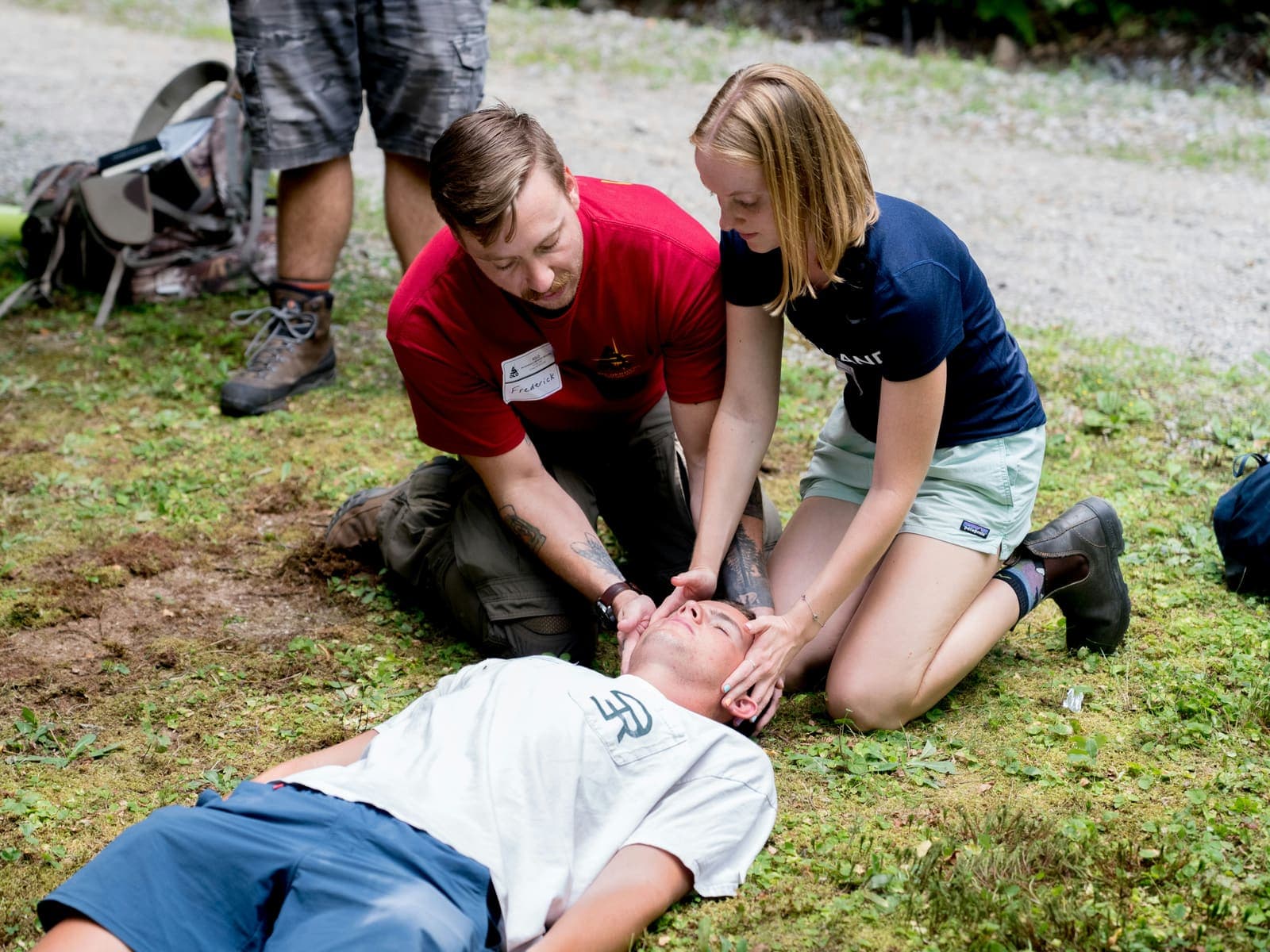
The sequence we recommend drilling follows the first aid section of ICSC 0165:
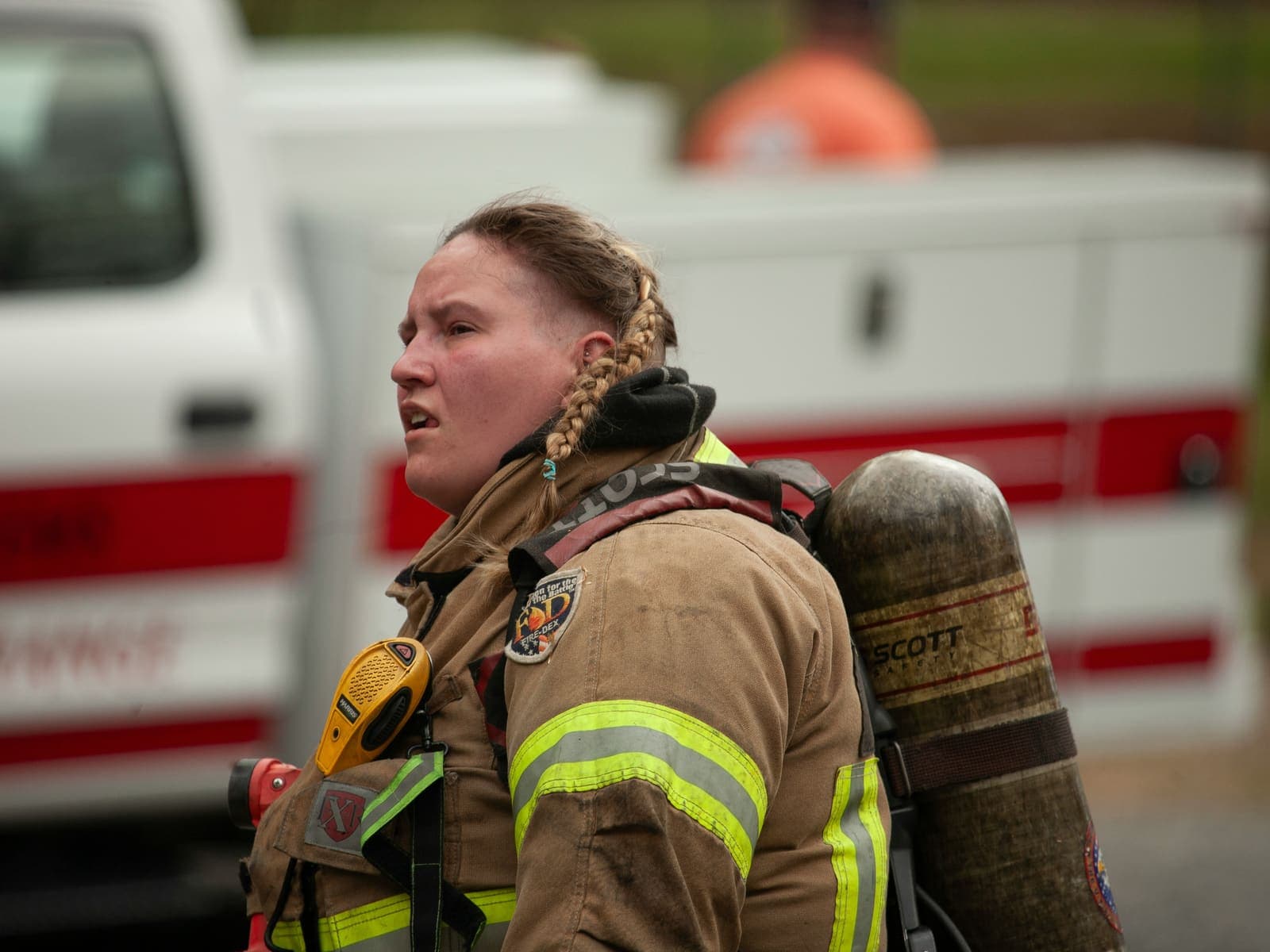
- Do not go in to rescue without SCBA. Raise the alarm, stop work, and call the rescue team.
- Rescuers wearing SCBA move the victim to fresh air along the planned evacuation route.
- Let the victim rest in a half-upright position. Give oxygen if needed, by trained staff.
- If artificial respiration is needed, do not use mouth-to-mouth; use the breathing aid available.
- If the eyes are affected, rinse with plenty of water for several minutes.
- Refer immediately for medical attention, including victims who have regained consciousness.
First aiders without respiratory protection wait outside the zone and receive the victim from the SCBA team. We cover their role and numbers in our article on workplace first aiders. The no-entry-without-SCBA rule only sticks when it is drilled repeatedly with the site's own scenarios, such as a worker collapsing in an IPAL control pit, and repeated for every roster crew. Emergency response planning and medical readiness for a site are covered in the article on site emergency response plans and medical readiness.
What does the site clinic do after an incident?
ICSC 0165 notes that symptoms of lung oedema often appear only after a few hours and are made worse by physical effort, so rest and medical observation are essential. A victim who seems to have recovered does not go straight back to work. The site clinic's tasks:
- keep enough oxygen for more than one victim, calculated as in our article on medical oxygen cylinders for site clinics;
- observe the victim, with the length of observation and follow-up decided by the doctor;
- arrange hospital referral if symptoms appear or worsen, with an evacuation route from a remote site as in the article on medical evacuation from remote sites;
- record the time, location, detector readings, symptoms, and treatment as input for the work accident report.
Presidential Regulation (Perpres) No. 7 of 2019 lists diseases caused by asphyxiant gases, including hydrogen sulfide, as occupational diseases (Appendix part I letter a point 16). The diagnosis is made by a doctor or a specialist competent in occupational health (Article 3), then recorded and reported, including by the employer (Article 5).
Through our OHS training service, we build H2S training around each site's risk map, together with first aid and CPR training, emergency drills, and evacuation simulations from H2S areas, scheduled around the roster. Under the regulations above, H2S competency certification must be carried out by a professional certification body (LSP) licensed by BNSP. Ask for the appointment or licence documents of whoever carries it out; they are attached to the proposal.