 ID
 EN
 中文
No Indonesian Minister of Health regulation (Permenkes) sets out ambulance specifications in detail: not the vehicle, not the interior, not the equipment list. What the regulations do set is the duty to have one. Health Regulation No. 11 of 2025 lists which clinics must provide an emergency ambulance service and requires a land, water, or air ambulance at Type 2 occupational health clinics. The technical detail sits in the Ambulance Technical Guidelines published by the Ministry of Health's Directorate General of Health Services in 2019. The guidelines are not a regulation. They were written as a technical reference for buying ambulances, which makes them the right basis for a purchase specification.
This article is for procurement, HSE, site management, and the clinic lead. It covers the vehicle and what goes inside it. Referral, choice of transport mode, escorts, and the evacuation bag are covered in our article on medical evacuation from remote sites. Care before the ambulance arrives is covered in our article on workplace first aiders.
Who has to provide an ambulance?
- Primary clinics (Klinik Pratama). Item h of the infrastructure standard in Regulation 11/2025 makes an emergency ambulance service mandatory for inpatient clinics, outpatient clinics that handle deliveries, and clinics that perform high-risk procedures. The service can be run in-house or through an agreement with another health facility or a licensed ambulance provider. Ambulance drivers are listed among support staff, as needed.
- Type 2 occupational health clinics. Type 2 covers workplaces with more than 1,000 workers in one work environment and/or workplaces classed as high risk for occupational safety and health. Their infrastructure list includes a land, water, or air ambulance, marked as specific to Type 2. Clinic types are explained in our article on mine site clinics.
- Medical evacuation. Article 5(3) and (4) of Health Regulation 47/2018 refers to transport ambulances or emergency ambulances, and allows other vehicles when neither is available, provided resuscitation and stabilisation continue. Its annex requires emergency ambulances to meet standards in four areas: roadworthiness, medical equipment, non-medical equipment, and staffing.
- Mining. Energy and Mineral Resources Decree 1827 K/30/MEM/2018, Annex III part B item 4, requires mining facilities, infrastructure, installations, and equipment to be identified, tested under a set procedure, and entered on a list of items declared fit to operate. The provision does not name ambulances. Our reading is that an ambulance working inside a mine area should be on that list and go through that testing.
Regulation 11/2025 also contains a business standard for medical evacuation services (KBLI 86904), with an ambulance equipment list and minimum crew. It binds licensed medical evacuation companies, not ambulances owned by an employer, so we use it here only as a benchmark.
Transport or emergency ambulance: which does a site need?
The 2019 guidelines classify ambulances by mode (land, water, air) and by medical need:
- A transport ambulance carries patients who are not in an emergency or potentially life-threatening condition. It carries basic life support equipment and staff competent in basic life support.
- An emergency ambulance treats and carries emergency patients, including care at the scene and transfers between facilities. Its staff and equipment differ from those of a transport ambulance.
Either type can be fitted with extra equipment and features for remote areas or difficult terrain. On site, we suggest choosing the type from incident scenarios rather than from a brochure:
| Site scenario | What we recommend |
|---|---|
| A stable worker taken to the mess, the airport, or a hospital follow-up | Transport ambulance |
| An injury in the pit, on a haul road, or in a plantation block far from the clinic | Emergency ambulance |
| A clinic-to-hospital referral with a long travel time | Emergency ambulance |
| A route that crosses a river or the sea | Land ambulance to the jetty, then water transport under the evacuation plan |
If the site has only one unit, we recommend the emergency type. The guidelines state that everything carried in a transport ambulance is also carried in an emergency ambulance, but not the other way round.
Land ambulance specification under the 2019 guidelines
The vehicle specification is essentially the same for transport and emergency ambulances. The difference lies in the medical equipment and the competence of the crew. These points belong in the purchase document:
- a complete vehicle bought as built, or a base vehicle with a passenger-transport chassis sold officially in Indonesia and converted by a licensed coachbuilder;
- 4x2 or 4x4 drive, single cab;
- vehicle no more than 10 years old, or as local rules require;
- a chassis holding a type-approval certificate (SUT) for passenger transport;
- a patient compartment large enough for the equipment and for staff to carry out medical procedures;
- non-porous interior surfaces that are easy to clean;
- a stainless steel stretcher base with a lock, plus storage for a long spine board or scoop stretcher;
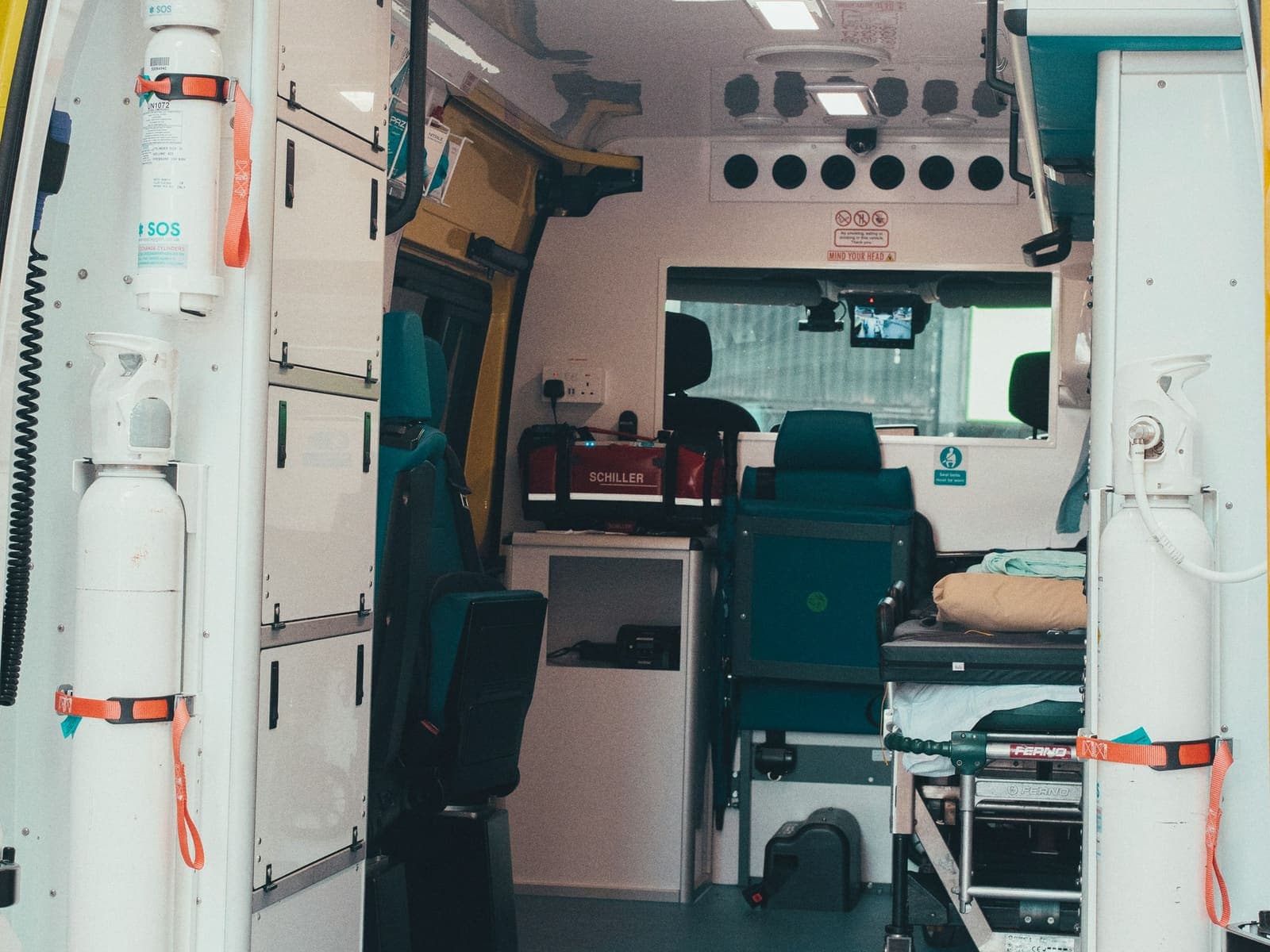
- central oxygen of at least 2 cylinders of at least 1 m³ each, kept in a closed cabinet and strapped so they cannot move while driving;
- a power supply for medical equipment separate from the vehicle's own, with an inverter of at least 1,000 VA for a transport ambulance and 1,300 VA for an emergency ambulance;
- two-way communications, a fire extinguisher of at least 1 kg, and a front cab separated from the patient compartment with a communication window.
Storing and sizing portable cylinders is covered in our article on medical oxygen cylinders at site clinics.
Does a site ambulance have to be 4x4?
No regulation requires 4x4. The guidelines allow either 4x2 or 4x4. For the 4x4 version, Table 5 adds off-road wheels, alloy rims of at least 15 inches, and tubeless radial tyres. The guidelines also specify a single cab, so the double-cab units some coachbuilders offer cannot be called standard.
Choose the drive from the road conditions: haul roads that turn slippery in rain, steep grades, unsealed plantation tracks. On a 4x4 unit, check two things that are easy to miss. First, whether the patient compartment still leaves room for a crew member beside the stretcher. Second, whether the stretcher stays locked over corrugated roads. In a mine area, put the unit on the list of facilities tested for fitness and run it under the site's mine traffic rules.
Ambulance equipment: what has to be on board?
The guidelines require all medical equipment in an ambulance to be calibrated and maintained regularly. A summary of Tables 1 and 2:
| Group | Transport ambulance (Table 1) | Added in an emergency ambulance (Table 2) |
|---|---|---|
| Examination | Blood pressure monitor, stethoscope, digital thermometer, penlight, blood glucose test | Same, packable in the emergency bag |
| Airway | Cervical collar, OPA, NPA, electric suction | ETT, supraglottic airway, laryngoscopes, portable manual suction |
| Breathing | Bag valve mask and several types of oxygen mask | Portable ventilator, portable oxygen cylinder of at least 0.2 m³ |
| Circulation | AED, infusion sets, IV cannulas, crystalloid fluids | Portable vital signs monitor, manual defibrillator |
| Stabilisation and evacuation | Splints, long spine board, stretcher | Scoop stretcher, extrication device, head immobiliser, emergency bag |
| Other | PPE, triage tags, an oxygen cylinder wrench | Obstetric set, rescue tools (optional) |
The land ambulance list in the medical evacuation standard of Regulation 11/2025 is close to Table 2. That standard also requires life-saving drugs, emergency drugs, and consumables as needed, and function testing and/or calibration of equipment. The clinic's responsible doctor then adjusts the list to site risks, such as burns in processing areas or falls from height.
Who crews a site ambulance?
Health Decree 882/2009 expects ambulance drivers to be trained in basic life support and evacuation technique. As a benchmark, the medical evacuation standard in Regulation 11/2025 sets a minimum land ambulance crew of one doctor competent in basic and/or advanced life support, two nurses competent in basic life support, and a driver who can give basic life support, is trained in defensive driving, and holds a driving licence.
On site, the ambulance driver often has other duties as well. Name a driver for every shift and roster, and make sure the relief driver has the same competence during leave. The role of the ambulance and its driver in an emergency should be written into the site emergency response plan.
What gets checked every shift?
Ambulance handover works best on the same sheet every shift:
- batteries charged for the monitor, suction, ventilator, and AED, and the inverter working;
- pressure in the central, portable, and spare oxygen cylinders;
- expiry dates on drugs and consumables;
- cleaning and disinfection of the patient compartment after each use;
- stretcher, locks, and patient straps;
- radio or other communications;
- vehicle: fuel, tyres, lights, and the service schedule from the manufacturer's manual.
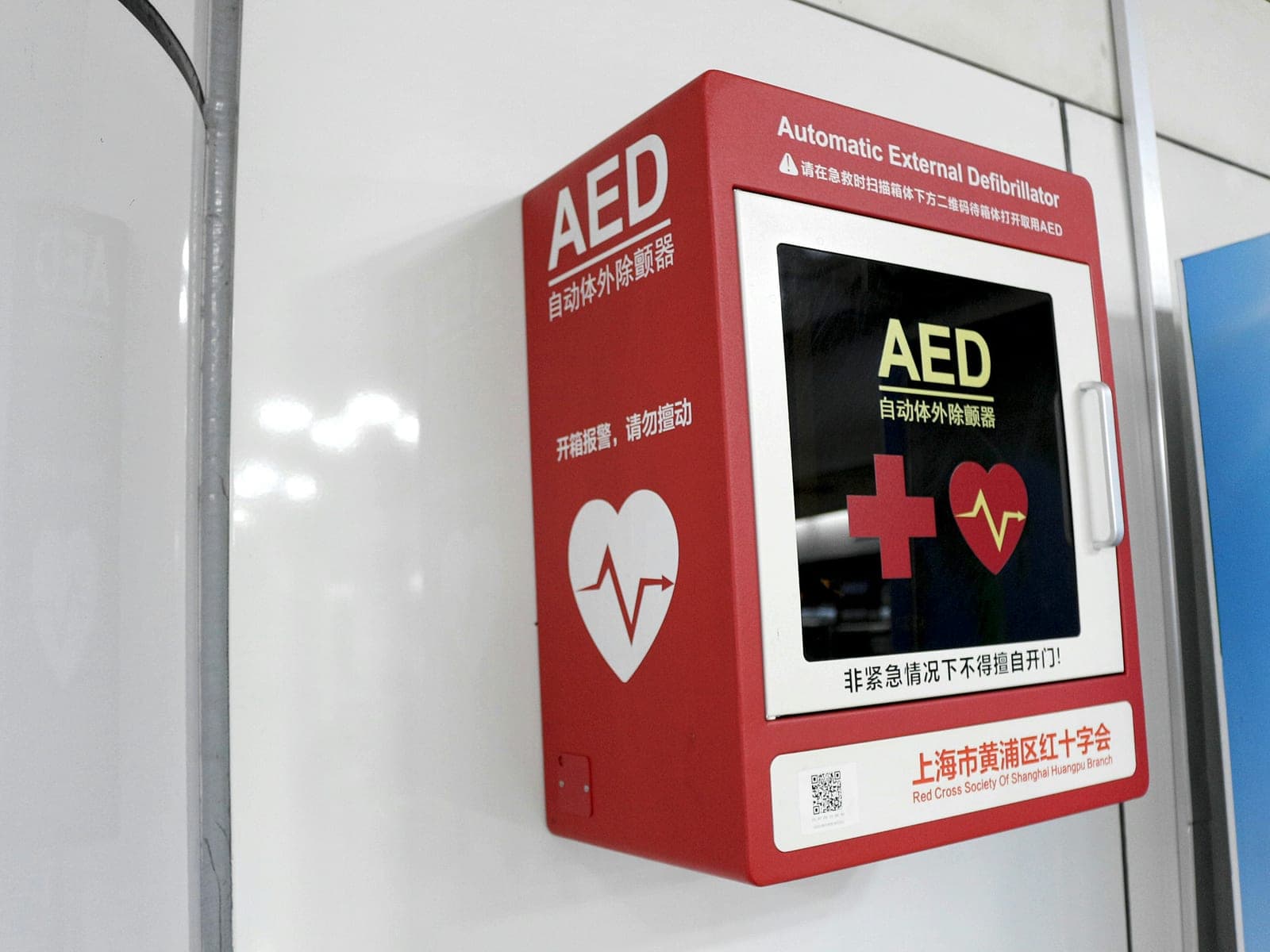
Record findings with the name of the person who checked. Medical equipment in the ambulance follows the clinic's function testing and calibration schedule, as described in our article on calibrating and maintaining medical equipment. AED placement and upkeep are covered in our article on AEDs at remote work sites.
How ADR Medika can help
Through our medical equipment service, we draw up the ambulance equipment list to the site's specification and needs, procure it, deliver it to site, install and function-test it, and carry out scheduled maintenance. For onsite clinics, our scope covers medical equipment, medicines, and ambulances. The vehicle body and interior are still built by a licensed coachbuilder. We are not a coachbuilder and we do not hold a medical evacuation business licence.